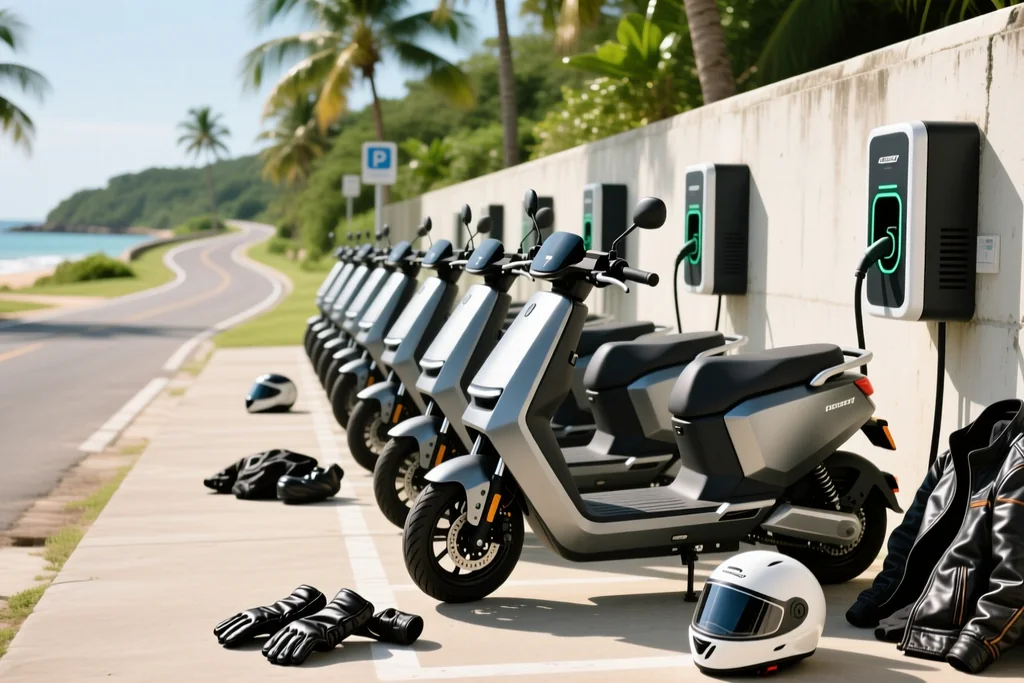
Demand for motorbikes on the island follows the weather, and the pattern repeats through the year with little variation. The same fleet that sits half idle in one month is stretched thin in another.
This article looks at how availability moves with the seasons and what that means for anyone planning to rent, from the choice at the counter to the way the roads themselves change.

A cycle driven by weather and travel habits
The island rental market is tied to the arrival of visitors, and arrivals have always followed the weather rather than the calendar alone.
When the skies are clear and travel peaks, the racks empty quickly and the popular machines are gone by the middle of the day.
When the rain settles in, the streets are quieter, the pressure drops and the same racks stay full for weeks at a time.
The cycle is no secret to anyone working in the trade, which is why shops plan their fleets around it and riders are wise to do the same.
What the quiet months feel like
In the quieter months the choice is wide and the pressure is low, so walking into a shop usually finds something suitable ready to go.
Shops have time to talk, and a rider can compare machines, sit on several and take a proper look before deciding anything.
The trade-off is the weather itself, which asks for more care on wet roads, better tyres and a plan that can change with the afternoon sky.
For riders who do not mind the rain, the quiet season is often the easier one to arrange and the one that rewards patience most.
What the busy months change
In the busy months the same racks empty quickly and the popular classes go first, often before a visitor has even arrived.
The pressure falls hardest on the small, easy scooters that most visitors want, and on the days around travel peaks when everyone moves at once.
Waiting until the last moment can mean accepting whatever is left rather than choosing the machine that suits the route and the rider.
Booking ahead is simply the habit that removes that uncertainty and gives you something to plan the rest of the trip around.
Availability by class of bike
Availability does not move evenly across a fleet. The everyday scooters are the first to go and the easiest to replace, since shops hold the largest numbers of them.
Larger machines and specialised bikes are thinner on the ground in every month, because fewer of them exist in the first place and they are slower to replace.
Electric models sit somewhere between the two, growing in number but still only part of most fleets and unevenly distributed between shops.
Knowing where a preferred class sits in that picture tells you how far ahead to plan and how much flexibility to keep in reserve.
| Class | Quiet months | Busy months | Planning note |
|---|---|---|---|
| Everyday scooter | Plenty of choice | Goes quickly | Book ahead in peak weeks |
| Larger machines | Limited | Very limited | Arrange well before you travel |
| Electric models | Growing choice | Mixed | Ask about charging as well as supply |
| Manual bikes | Limited | Limited | Confirm the model you want early |
The effect on the decision you make
When availability is tight, riders make faster decisions with less comparison, and that is where disappointment usually creeps in.
A bike that is merely available can push out the bike that would have suited the route far better, simply because it was the one still on the rack.
Planning early restores the choice, and choice is a large part of what makes a rental feel right rather than merely adequate.
Even a small amount of lead time changes the whole experience, and it costs nothing but a little forward thinking.
Booking ahead without overcommitting
Booking ahead does not have to mean locking every detail of a trip into place before you have even landed.
A reservation for the first stretch, with room to extend, keeps both flexibility and a sensible safety net under the plan.
Ask how a change of plan is handled and whether the shop can move your dates if travel shifts for reasons outside your control.
Confirm what is being reserved, which should be the class of bike rather than a vague promise that is hard to hold anyone to.
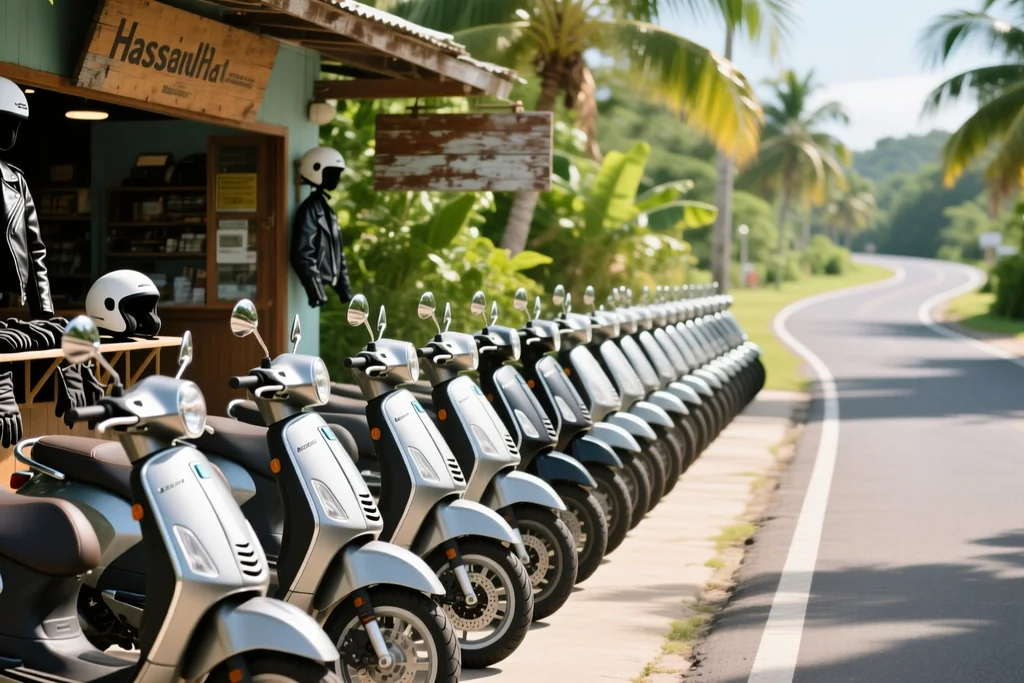
Low and high season: how availability changes through the year
Related guide on this topic.
Riding with the season rather than against it
The season shapes the roads as well as the rental market, since traffic, surface conditions and the pace of the island all shift with it.
Riders who accept that rhythm plan shorter days in the wet and longer ones in the dry, rather than trying to ride the same route in both.
The bike you choose and the routes you ride can both follow the season instead of fighting it, which makes the riding more comfortable in every month.
Working with the pattern is what makes both the quiet and the busy months workable, whichever one your trip happens to fall into.
- Expect wide choice in the quiet months and tight supply in the busy ones.
- Book the popular scooter classes ahead if your travel dates are fixed.
- Plan larger or specialist bikes further in advance than everyday ones.
- Keep some flexibility so a change of dates stays easy to handle.
- Let the season guide your routes as well as your booking timing.
The seasonal rhythm is predictable, and that is exactly what makes it useful, because availability and demand can both be planned around rather than reacted to.
Book the bikes that go first, stay flexible on the rest, and the season becomes a detail rather than an obstacle standing between you and the island.