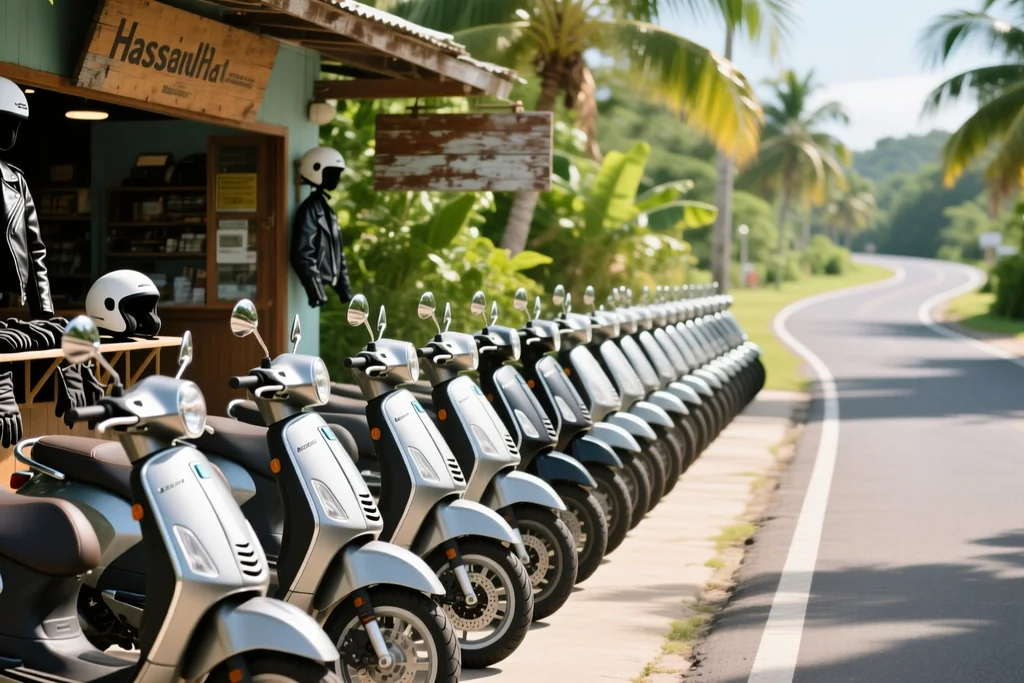
Electric scooters have moved from curiosity to familiar sight in rental fleets on the island. They arrive quietly, charge overnight and ask for a slightly different set of habits.
This article looks at what the shift means for a rider deciding whether to take one, and what is worth understanding before the keys change hands.
Why electrics are entering rental fleets
The reasons are practical rather than fashionable. Electric scooters have fewer moving parts, need less routine attention and suit short island journeys well.
For a rental shop that means simpler maintenance, fewer consumables and a machine that is easy for a newcomer to handle from the first minute.
Riders notice the quiet first, then the smooth delivery of power with no gears to find and no warm-up before setting off.
Those qualities are exactly what a short, stop-start island trip rewards, which is why the machines have settled in so quickly.
How they feel to ride
An electric scooter moves off the moment the throttle is twisted, with no clutch to release and no gear to select.
Power arrives smoothly and quietly, which makes slow traffic and tight turns feel easier than on a geared machine of the same size.
The weight sits low in the frame, which helps at walking pace without making the bike any lighter to push around a parking area.
Riders who have only used petrol scooters usually settle in within a few minutes and stop noticing the difference by the second ride.
Range and charging as the real question
Range is the figure that matters most with an electric bike, and it depends heavily on how the bike is ridden rather than on the published number alone.
Hills, sustained speed and a heavy load all draw the battery down faster than a gentle ride on the flat with a light hand on the throttle.
A realistic plan means knowing how far you intend to go in a day and where the bike can be charged without disrupting the rest of the trip.
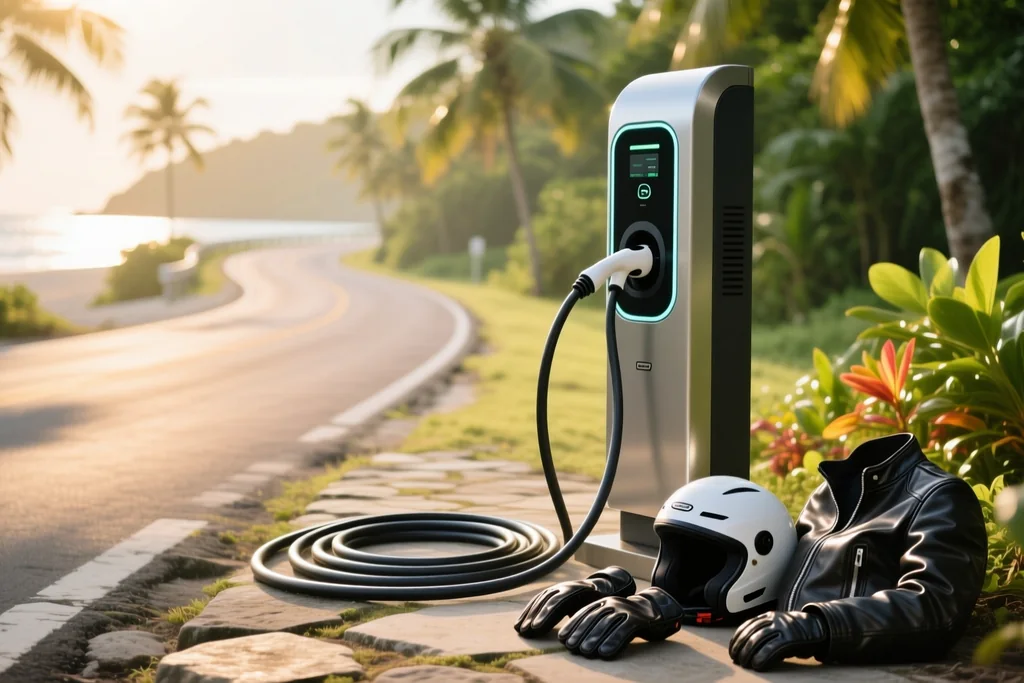
Charging at your accommodation overnight is the simplest arrangement and the one most riders end up using for the whole rental.
Charging, range and daily habits
Before accepting an electric bike, it is worth working through a few practical questions at the counter.
The answers will tell you whether the bike suits the riding you have in mind, or whether a petrol scooter would serve the days ahead better.
None of the questions is complicated, and asking them takes only a few minutes that are easily recovered later in the trip.
Ask about the battery's condition and how long a full charge takes before you commit to the machine.
| Question | Why it matters | What to check |
|---|---|---|
| Daily distance | Range shrinks with hills and speed | Compare your plan with a realistic range |
| Charging point | Not every stay has a convenient socket | Confirm where the bike can be plugged in |
| Charge time | A slow charge changes the shape of a day | Ask how long a full charge takes |
| Battery condition | An older pack holds less | Ask how the bike performs on a full charge |
Where they suit island riding
The island's distances are short enough that most trips fall comfortably within the range of an electric scooter.
Short hops between beaches, the old town and nearby viewpoints are exactly the kind of riding electrics handle best, with plenty left in reserve.
Longer loops that climb into the hills ask more of the battery, so those days deserve planning around charging points and a sensible turnaround.
Matching the bike to the day is the same discipline that applies to every rental, whatever is under the seat.
The quiet and the trade-offs
Silence is the most obvious advantage and also the thing that deserves a moment of thought before setting off.
Without engine noise, other road users may not notice you as readily, so your own visibility and positioning matter more than usual.
Braking and acceleration behave differently too, and a light touch on the throttle keeps the ride smooth and predictable in traffic.
The trade-offs are small and easy to manage once you know what to expect, which is why a short briefing at the shop is worth asking for.
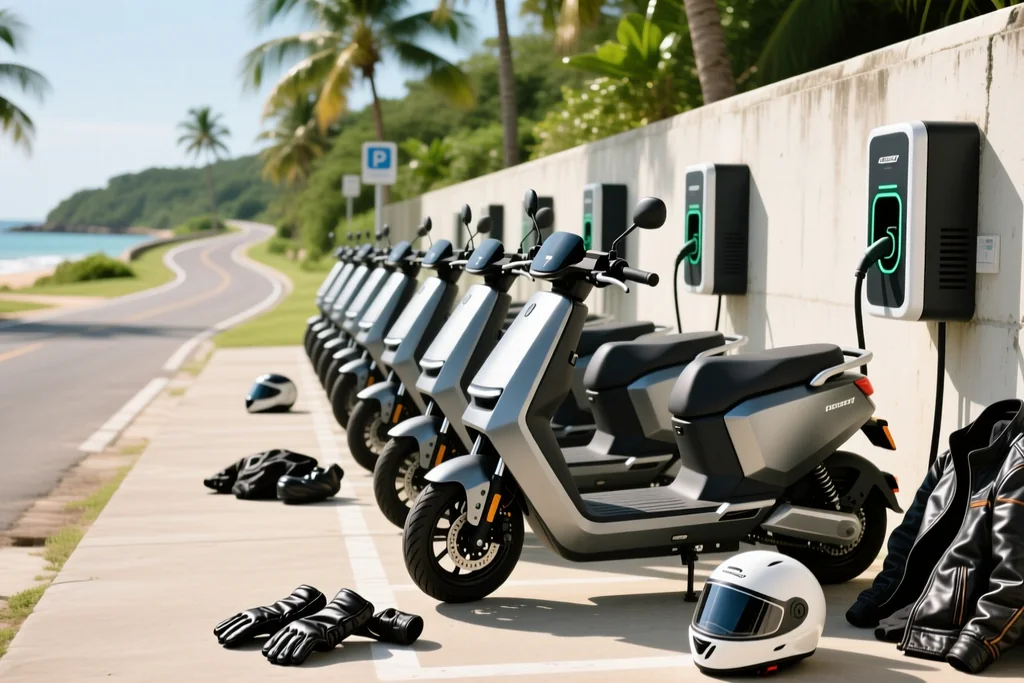
Electric and silent: the quiet shift in island rentals
Related guide on this topic.
Deciding whether an electric suits you
An electric scooter fits a rider who wants simple operation, short daily distances and a quiet ride around the coast.
It fits less well for long days in the hills, or for anyone unwilling to think about charging as part of the daily plan.
Being honest about how the bike will actually be used makes the decision straightforward and removes most of the doubt.
Ask the shop to walk you through charging and range before you ride away, and take the first ride at an easy pace.
- Take an electric bike when your riding is short and mostly local.
- Work out your daily distance before you accept the range.
- Confirm where and how the bike will be charged during the rental.
- Ask about the battery's condition rather than assuming a full range.
- Ride extra visible, since a silent bike is harder for others to notice.
The shift towards electric rentals is steady, and it changes the experience rather than the basics, since the helmet, the documents and the inspection all stay the same.
Choose one when the day suits it, plan the charging in advance, and the silence becomes one of the nicer parts of the ride rather than a thing to worry about.