Rider guidance on the island keeps returning to the same themes, and the helmet sits at the top of the list. It is the simplest piece of safety equipment and the one most often highlighted.
This guide looks at what the recurring advice actually means for a visitor, and how the basics of helmets, documents and behaviour shape a trouble-free trip.
Why helmets stay at the centre
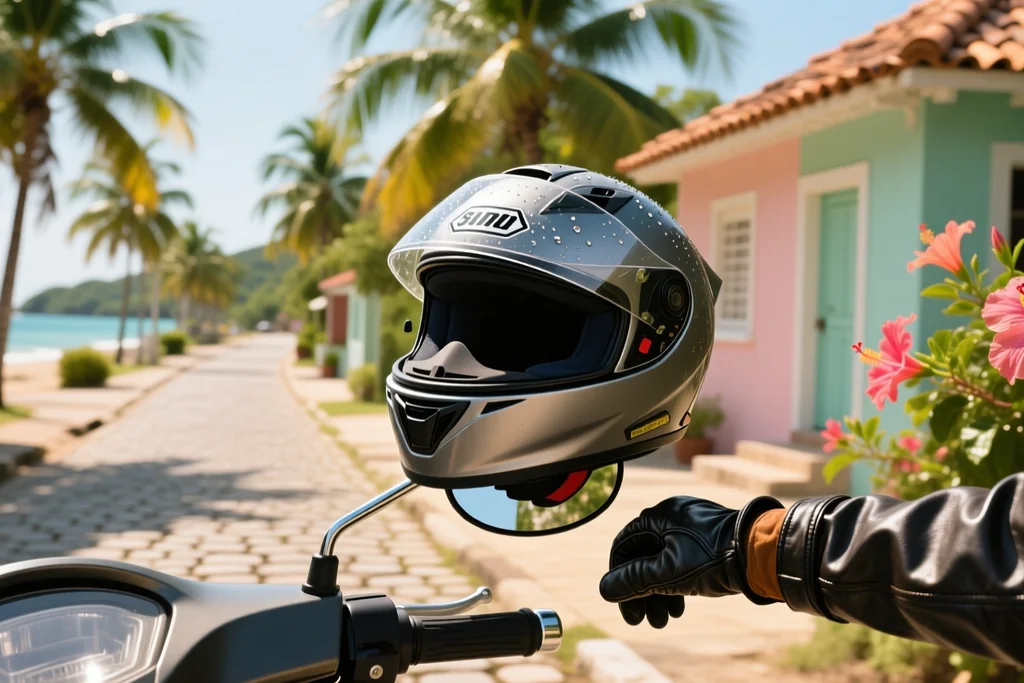
The helmet is the one piece of protection that helps in almost every kind of incident, which is why it dominates rider guidance. It protects you in a fall and it protects you in a stop.
It is also the easiest rule to follow, which explains why attention keeps returning to it. Wearing one costs you nothing and asks for no skill.
If you take only one piece of advice from the island, make it this one.
It protects you in the small incidents as well as the serious ones, which is why it keeps appearing at the top of every reminder. A helmet is checked at the shop before you ride away, and a quick fasten of the strap is all that is really asked of you.
Choosing and wearing a helmet properly
A helmet only works if it fits and is fastened. A loose one that sits far back on the head does far less for you in a fall.
Check that the strap fastens snugly under the chin and that the shell sits level, covering the top and back of the head.
Ask the rental shop to check the fit before you ride away. A minute at the counter is worth more than any adjustment later.
A helmet that fits well is comfortable enough to forget about, and that is exactly what you want from a piece of safety equipment. Keeping the rental paperwork with your licence means a roadside check is over almost before you have fully stopped.
Documents riders are reminded to carry
Alongside the helmet, guidance keeps reminding riders to carry the right documents. This is the paperwork side of the same message.
Have your licence and permit with you, and keep the rental paperwork handy, so a roadside check is quick and simple.
Keeping everything in one place makes it easy to produce when asked, rather than searching through bags at the side of the road.
Carrying the right documents is a small habit that turns a possible delay into nothing more than a few seconds at the roadside. The reminders about speed and alcohol matter most, because they shape the choices that riders control directly.
The behaviour themes behind the rules
The reminders about helmets and documents sit on top of a wider message about how riders behave. Speed, alcohol and risky overtaking come up again and again.
These are the choices that turn a minor mistake into a serious one, far more than the equipment ever does.
The advice is not aimed at experts or beginners alone. It is the same short list that applies to every rider on the island.
The messages about speed, alcohol and overtaking all point the same way, towards the choices that riders control directly. Treating the guidance as a simple habit rather than a set of rules makes it easy to keep without even thinking about it.
What the advice means for a visitor
For a visitor, the recurring guidance translates into a few simple habits. Wear the helmet, carry the documents, and ride within your own limits.
None of it is complicated, and none of it takes the fun out of the trip. It is the price of riding anywhere new.
Treating the guidance as a checklist rather than a lecture is the quickest way to make it part of your routine.
For a visitor, the guidance is simply a short checklist that fits easily into the routine of picking up a bike and setting off.
| Area | The reminder | Why it matters |
|---|---|---|
| Helmet | Wear one and fasten it | Protection in almost every incident |
| Documents | Carry your licence and permit | A roadside check stays simple |
| Behaviour | Watch speed and overtaking | Where small errors turn serious |
| Fit | Check the helmet at the shop | A loose helmet protects far less |
Enforcement and the roadside check
When enforcement focuses on the basics, the roadside check becomes a short and ordinary event. A helmet on and documents ready is usually all it takes.
Stay calm, keep the conversation simple and produce what is asked for. There is no need for anything more than that.
Knowing what to expect removes the worry, which is most of what a check is really about for a visitor.
Expecting a check to be quick and ordinary removes most of the worry, and the reality usually matches the expectation.
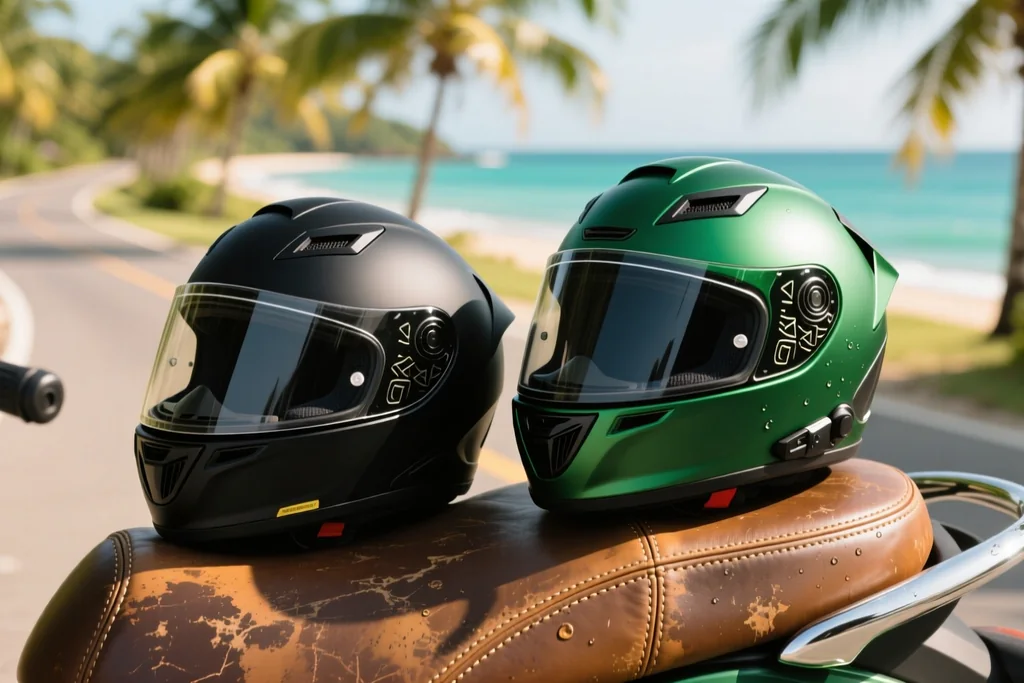
Helmet and safety rules: what riders are being reminded of
Related guide on this topic.
Making the rules work for you
The final point of all this guidance is not restriction but protection. Every rule on the list exists because it helps in a situation you would rather not meet.
Follow the basics from the first ride, and they become automatic long before you notice you are doing them.
Ride safely, stay visible and keep your documents with you, and the island's reminders become the least of your concerns.
Follow the short list from the first ride and it becomes automatic, leaving your attention free for the road and the ride itself.
- Wear a helmet on every ride, however short the journey looks.
- Make sure it fits snugly and fastens properly under the chin.
- Carry your licence, permit and rental paperwork together and within reach.
- Watch your speed and your overtaking, which is where risk grows fastest.
- Treat a roadside check as a short, ordinary event and stay calm.
The recurring reminders about helmets and documents are not noise. They are the short list of things that make the biggest difference.
Follow them from the first ride, and the island's guidance becomes a routine you barely notice, which is exactly how it should be.