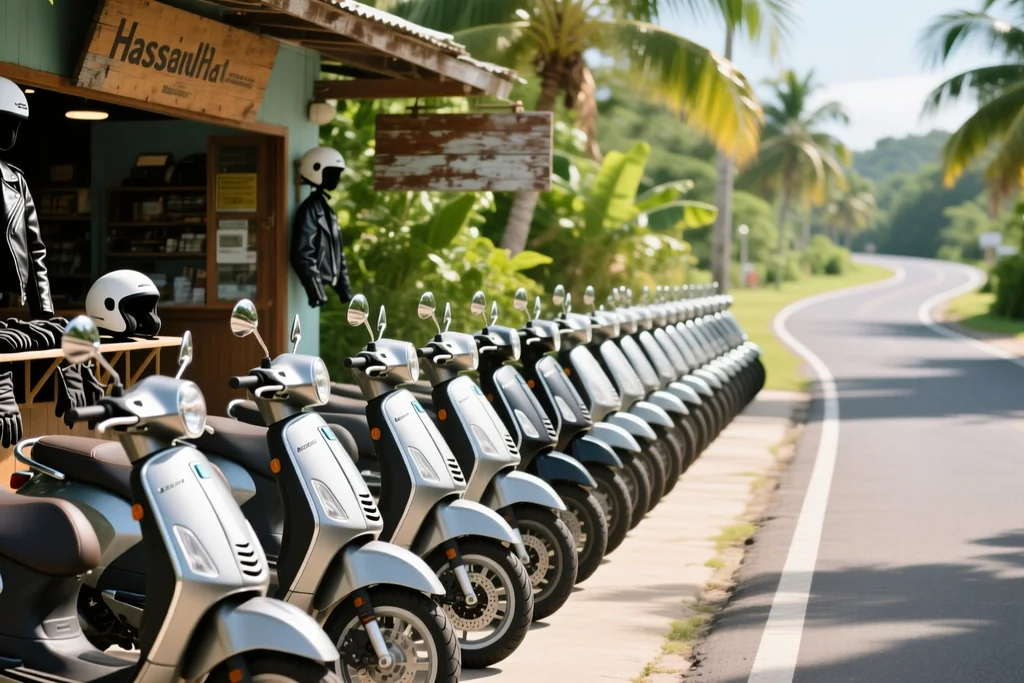
Booking a motorbike once meant walking up to a counter and talking it through. More of that conversation now happens on a screen, before the bike has even been seen.
This article looks at what digital booking changes for the rider, and what still has to be checked in person once the keys are finally in your hand and the road is in front of you.
From the counter to the screen
Digital booking began with availability and now covers far more of the arrangement, since photos, terms and messages all live in one place.
For a visitor, that means the first part of the rental can be settled before the trip even begins, from a different country and a different time zone.
The conversation does not disappear, it moves, and it leaves a written record behind as it goes from one screen to the next.
Riding the bike is unchanged, and the framing around the rental is what has shifted over the past few years and continues to shift.
Digital contracts and what they contain
A digital contract is the same agreement in a different form, and the important parts are identical to the paper version.
Duration, collection point, return point and the condition of the bike should all be clear before you accept anything on a screen, so nothing important is left to a hurried conversation later.
Because it sits on a phone, it is easy to read properly at your own pace rather than skim at a busy counter with a queue behind you.
Take the time to read it, and keep a copy within reach later in the trip when a question about the terms suddenly matters.
Photo records and condition reports
Photo records are one of the genuinely useful parts of digital booking, since the condition of the bike is documented before you ride away.
Matching your own photos to the record protects you if there is any disagreement at the end of the rental about what was already there.
Check that the images are clear enough to show existing scratches, dents and wear, and that they cover both sides of the machine.
If the record is thin or the photos are unclear, take your own complete set before leaving the handover point, and keep them until the rental is formally closed.
What the app can and cannot do
A booking app handles some parts of a rental well and others not at all, and the line between the two is not always obvious at first, which is why the handover deserves undivided attention.
Knowing which is which keeps expectations in the right place and prevents unpleasant surprises at the handover when the bike finally appears.
Nothing about the bike itself can be verified from a screen, and that is the part that matters most to a rider about to set off.
Treat the app as the arrangement and the handover as the reality check that confirms it, rather than as a substitute for either side of the rental.
| Task | Handled digitally | Still needs you in person |
|---|---|---|
| Availability and dates | Usually | Nothing further to check |
| Terms and contract | Usually | Reading them properly |
| Bike condition | Sometimes | Your own inspection and photos |
| Keys and handover | Rarely | Collecting the bike and checking it over |
Support and communication during the rental
A messaging channel inside a booking app changes how problems are handled, since a question can be asked and answered without a phone call.
That is convenient, but it also means the written exchange becomes part of the record and can be referred to later by either side.
Keep messages clear and specific, and save the ones that matter rather than letting them scroll away in a long thread.
If something goes wrong, a short written trail is far more useful than a half-remembered conversation at the side of the road.
What still happens face to face
Some parts of a rental cannot be moved onto a screen, and the most important one is the inspection of the machine itself.
Walking around the bike, checking the brakes and looking closely at the tyres has to happen in person and in decent light.
Collecting the keys, hearing how the bike behaves and asking the small practical questions all belong at the handover.
A digital booking is a starting point rather than a replacement for looking at the machine you are about to ride.
App-based bookings: what changes for the rider
Related guide on this topic.
Getting the best out of digital booking
Used well, digital booking removes the guesswork from the early part of a rental and leaves the rider with more time for the trip itself.
Confirm the class of bike rather than a vague description, and check the dates and the handover points carefully before accepting.
Read the terms before accepting them, and ask anything unclear through the app while it is still easy to change.
Then treat the handover as the real beginning and inspect the bike exactly as you would without an app in the picture.
- Read the digital contract properly before you accept it.
- Check the photo record and add your own set at the handover.
- Confirm the class of bike, the dates and the handover points.
- Keep written messages clear, since they become part of the record.
- Still inspect the bike in person before you ride away.
Digital booking makes the paperwork tidier and the record clearer without changing what makes a rental go well from the rider's side.
Use the app for the arrangement, then rely on your own eyes at the handover, and the two together cover everything that matters in the end.