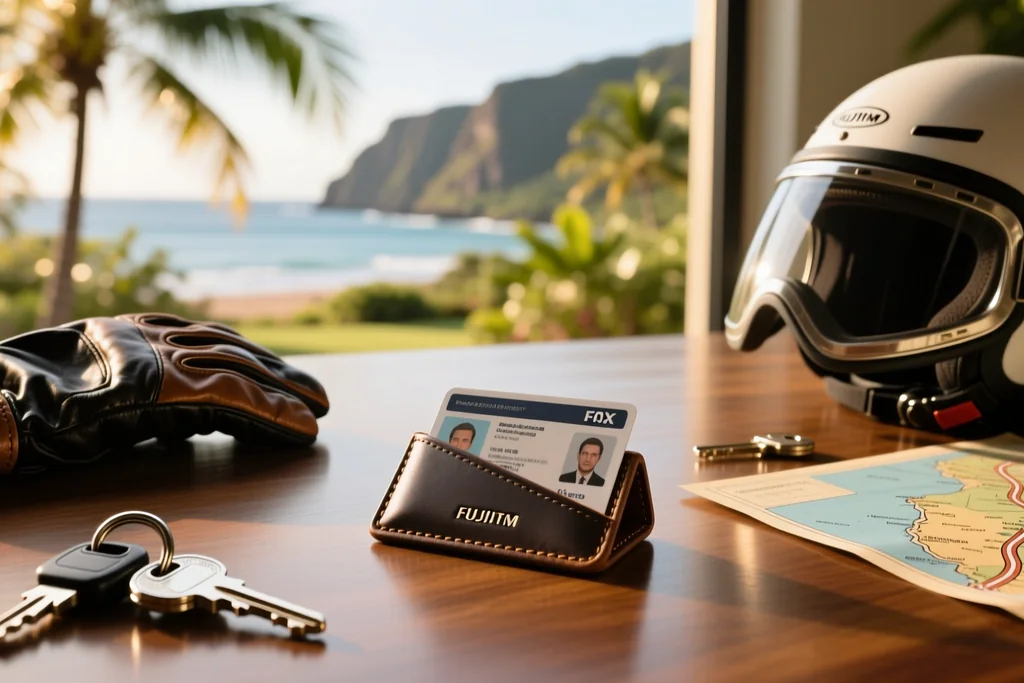
A roadside check is usually short, routine and far less dramatic than riders imagine. It becomes stressful only when the right documents are somewhere else, or when the conversation is complicated by language.
Knowing what is normally asked for, and how to handle the moment calmly, turns a stop into a few quiet minutes rather than the story of the holiday. Preparation does most of the work before you ever leave the shop.
Why checks happen and who carries them out
Checks happen for traffic enforcement, for safety and at times as part of a wider campaign on helmets or documents. They are a normal part of enforcement rather than a personal accusation.
Officers may work alone or in a small group, at a fixed point or on a moving patrol. The purpose is usually a quick look rather than a long interrogation.
Knowing the context keeps the moment in proportion. Most stops end with a nod and a wave on your way.
Riders sometimes take a stop personally, and that is the quickest way to make it longer. A check is directed at the road and at the rules, not at you as a visitor.
What is usually asked for
The usual request is your licence, your international permit where one applies, and the rental documents for the bike. Sometimes registration and insurance papers are checked as well.
Keep these together in one place so you can produce them without emptying a bag at the roadside. A single pouch saves minutes and a good deal of awkwardness.
The rental agreement and the shop contact details are worth carrying too, because they answer questions about how the bike was obtained.
If the bike belongs to a shop, remember that the registration sits in the shop's name. That is perfectly normal, and the agreement explains it in a line or two.
Helmets and riding behaviour
A helmet is a basic legal requirement, and it is the first thing an officer notices. Wearing one properly, with the strap fastened, sets the tone of the whole stop.
How you arrived matters as much as what you carry. Careless riding draws attention long before a document is ever requested.
Nothing in a check is worth an argument at the roadside. Calm riding and simple compliance keep the moment short for everyone.
Staying calm during a stop
Slow down, pull over safely and switch off the engine. Keep your hands visible and stay on the bike or step off slowly, following whatever the officer indicates.
Speak quietly, keep your movements unhurried, and hand over documents rather than waving them about. Calm behaviour is read as cooperation.
You do not need to explain your whole trip. Answer what is asked and let the check take its own course.
A check is not the moment to negotiate or to test how much tolerance there is. Simple cooperation closes the matter fastest for everyone at the roadside.
Language and getting your point across
A language gap is common and rarely a problem. A polite tone, a smile and a document do most of the talking for you.
If you do not understand, say so plainly rather than guessing at an answer. A translation app or a written note can bridge a simple question.
Avoid arguing in a language you do not speak well. Patience communicates far more than volume ever will.
Keep a translation app open before you need it, with a few phrases saved for the questions you expect to come up.
| Item | Why it is asked for | How to prepare |
|---|---|---|
| Licence | Confirms your entitlement | Carry the original |
| International permit | Translates the licence | Keep it with the licence |
| Rental agreement | Shows how the bike was obtained | Keep your copy to hand |
| Helmet | A basic legal requirement | Wear it, strap fastened |
| Shop contact | Answers questions about the bike | Save the number |
If something is not in order
Sometimes a document is expired, missing or simply left at the hotel. Say so honestly and ask what the next step is rather than inventing an explanation.
If the issue is a fine or a procedure, ask for it to be explained in writing so you can follow it properly. Clarity protects you long after the stop has ended.
Never try to resolve a matter informally or to talk your way around a requirement. That only complicates a situation that was simple to begin with.
The correct response is to comply with the process, and to contact the rental shop if the bike itself is involved.
Roadside checks: how to handle a stop calmly
Related guide on this topic.
After the stop, back on the road
Once you are waved on, ride away calmly and put the stop behind you. There is nothing to prove in the first hundred metres.
If something was noted or a document was recorded, tell the rental shop when you next speak with them. They prefer to know early rather than later.
If you are ever unsure about your documents, sort it out before the next ride rather than hoping it will not come up again.
Riders who have been stopped once usually find the next time far easier. The first stop is mostly about learning where everything is kept.
- Your licence and international permit, kept together.
- The rental agreement for the bike you are riding.
- Your passport or identification where you carry it.
- A helmet for you and for anyone riding with you.
- The shop contact details for anything unclear.
A roadside check is rarely about catching anyone out. It is a short, routine moment that goes smoothly when the documents are where they should be.
Keep them together, keep calm, and the stop will be over before you have had time to worry about it.