The paperwork behind a rental matters more than most riders expect, and it tends to be checked at the moment you would rather not be stopped. Knowing which licence covers a scooter and which covers a motorbike removes most of the confusion at the counter.
What you must carry is decided by the country you are riding in rather than by the rental shop or by the rules at home. This guide explains the categories, the international permit and how to keep everything ready for a roadside check.
Why the licence category matters
A driving licence is issued for specific vehicle categories, and that category is the first thing an officer reads. A document covering a car does not automatically cover a motorbike, however similar the two feel to operate.
The line between a scooter and a motorbike usually follows engine size and how the machine is classified locally. Because those lines move between countries, the reliable approach is to read what your own permit actually states.
If your home licence does not include the right category, no translation will add it. Confirm your entitlement before you travel rather than at the counter when the keys are ready.
What an international driving permit adds
An international driving permit is a translation of your national licence, not a licence of its own. It helps an officer read your entitlement when the home document is written in another language.
It is normally valid only alongside the original licence, so the two travel together. Carrying one without the other leaves you unable to show what you are entitled to ride.
The permit must match the categories listed on your national licence. A translated permit cannot grant a category the original document never held in the first place.
Matching the document to the machine
The bike you plan to rent decides which categories you need. A small automatic scooter and a larger geared motorbike sit in different places in most systems, though both have two wheels.
Be clear with the rental shop about what you are licensed to ride. A good shop will steer you towards a machine that fits your documents rather than one that does not.
Choosing a bigger bike than your entitlement allows is not a technicality. It changes how an insurer views the ride and how a check is resolved on the day.
What riders are normally asked to show
At the counter the usual request is your licence, your permit where one applies, and your passport as identification. The shop records these for the rental file.
Keep the rental agreement and the shop contact details with you. A roadside check often asks how the bike was obtained, and the contract answers that question quickly.
Originals matter more than copies. A photograph on your phone is a helpful backup but is rarely accepted in place of the document itself.
| Document | What it shows | When it matters |
|---|---|---|
| National licence | Categories you may ride | At the counter and at a check |
| International permit | A translation of the licence | When the home licence must be read |
| Passport | Identity for the rental record | When the agreement is made |
| Rental agreement | How the bike was obtained | Questions about ownership |
| Shop contact | Who to call about the bike | Breakdowns and questions |
When the categories do not line up
Sometimes a rider arrives with a licence covering cars but not motorbikes and still wants to ride. The honest answer is that this is a question about compliance, not about convenience.
Riding without the correct entitlement can leave you uninsured after a claim and exposed at a check. No rental is worth that kind of risk on a holiday.
The sensible path is to arrange the right category at home or to adjust your plans to what you may legally ride. A shop that cares about its customers will tell you the same thing.
Validity, expiry and keeping documents safe
Check the expiry dates on every document before you leave home. An expired licence or permit is treated as no document at all, and renewals take time to arrange.
Store the originals somewhere dry and secure and carry them only when you ride. A zipped pocket or an under-seat compartment is safer than a loose bag swinging at your side.
If a document goes missing, report it early and keep a note of the reference. Replacements are far easier to arrange while you still hold a record of the original.
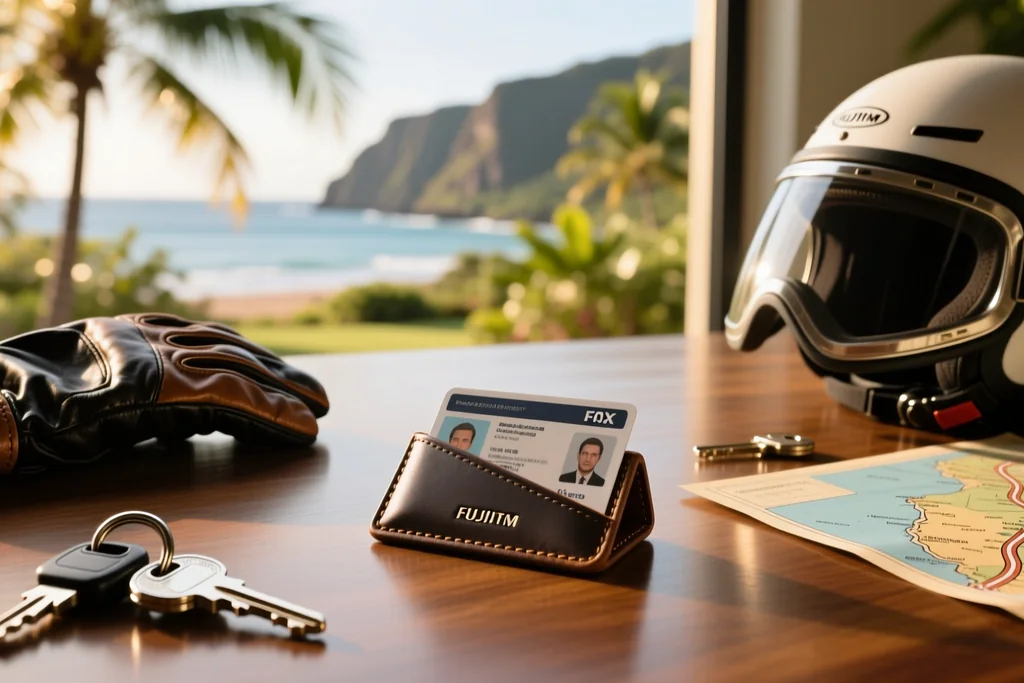
Licence and international permit: what riders should carry
Related guide on this topic.
Preparing before you arrive
Sorting the paperwork at home removes stress from your first hour on the island and lets the shop prepare a bike that suits what you may ride. A little preparation goes a long way.
Ask the rental shop in advance which categories they require for the machines you are considering. A short message before you travel settles most of the questions.
- Whether your licence shows the category for the bike you want.
- Whether your international permit matches those categories.
- Whether every document sits inside its expiry date.
- Whether you can carry the originals safely while riding.
- Whether the shop has confirmed what it needs before you arrive.
The right documents turn a rental into a simple transaction and keep the focus where it belongs, on the road and on the island.
Check the categories, carry the originals, and ask the shop early. Everything after that is simply riding.