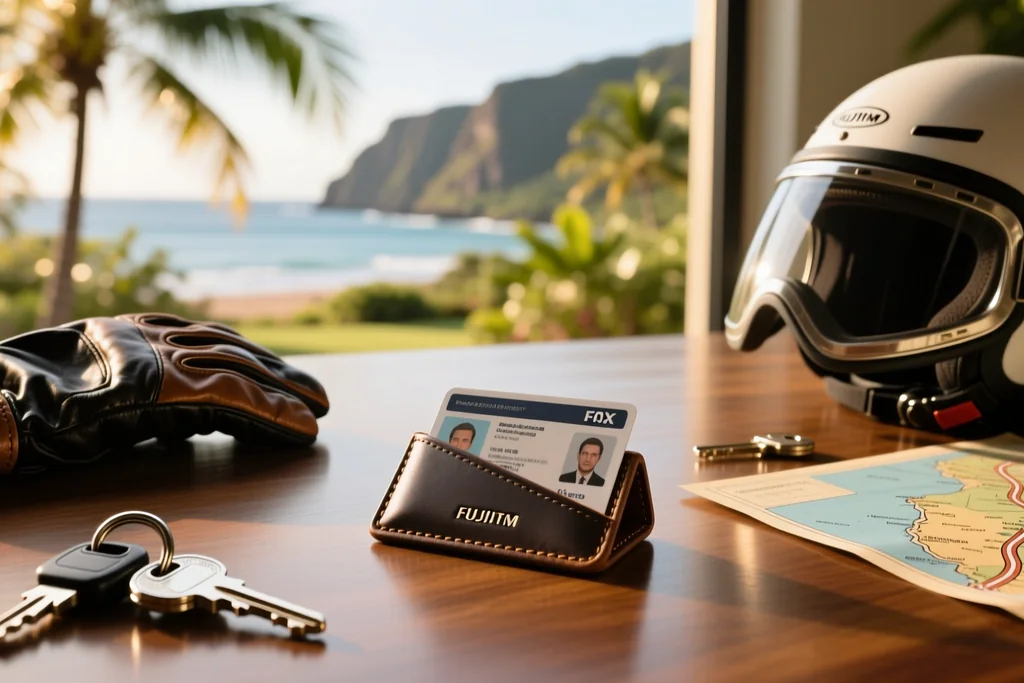
The moment you hand over a passport or leave a deposit is the moment the rental becomes real, and it is worth understanding exactly what you are giving up. Riders often study the bike and leave the paperwork until the last minute.
Shops use different arrangements, and the arrangement decides how easily you get your document or your money back. This guide explains the common options and the questions that protect you before you sign.
What a deposit is actually for
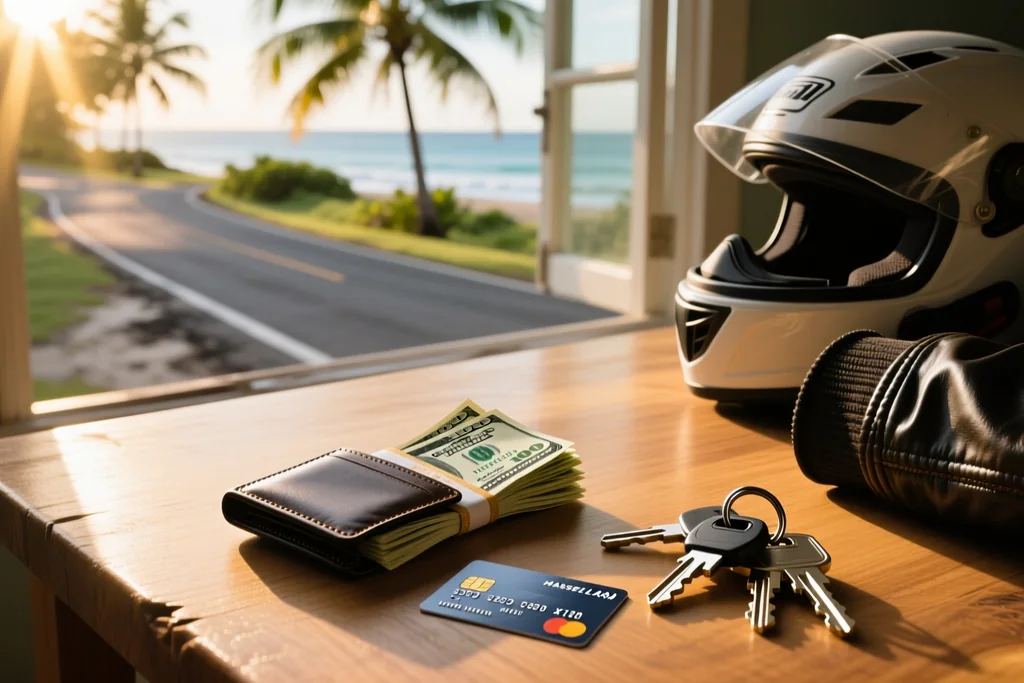
A deposit is security rather than payment. It stands against damage, a late return or a missing item, and it is normally returned once the bike is checked back in.
Understanding this changes how you treat the return. A rider who knows the deposit is tied to condition tends to photograph the bike carefully at both ends of the rental.
Ask what the deposit is measured against before you agree to it, so there is no surprise when the bike comes back.
A deposit is not a fee and it is not a hidden charge. It is a temporary hold, and the whole point of the arrangement is that it comes back when the bike does.
When a shop asks for your passport
Some shops ask to hold a passport as security instead of a cash deposit. That is a real inconvenience if you need identification during your stay.
Going without your passport for days can complicate everything from hotel check-in to a medical visit. It is worth asking whether another arrangement is possible.
If you do leave a document, keep a clear note of what was taken, by whom and when. A written receipt makes the return simple.
If you would rather not part with the document at all, say so early and calmly. Many shops can adjust the arrangement once the question is asked directly.
Cash, card and pre-authorisation
A cash deposit is the simplest arrangement to picture: money changes hands and comes back on return. The risk is only that you must be there to collect it.
A card arrangement often works as a pre-authorisation, which holds an amount against your card rather than charging it. The hold is released after the bike is returned and checked.
Understand which type you are agreeing to before signing, and confirm how long any card hold takes to fall away.
Whichever form it takes, ask for the arrangement to be written into the agreement. Something quoted out loud at the counter is easy to forget and hard to prove later.
The condition report at handover
The condition report is the record that decides most disputes. Walk the bike with the staff member and mark every scratch, crack and scuff that already exists.
Take your own photographs alongside the shop sheet, in daylight, covering both sides, the wheels and the dashboard. Two records are far better than one.
Damage noted at handover cannot be charged to you at return. The few minutes it takes is the cheapest protection in the whole rental.
| Arrangement | How it works | What to ask |
|---|---|---|
| Cash deposit | Money held, returned on return | Who returns it and where |
| Card pre-authorisation | An amount held on the card | How long the hold lasts |
| Passport held | A document kept as security | Whether an alternative exists |
| Agreement only | No separate security held | What covers damage instead |
Reading the agreement before you sign
Read the agreement while you are still standing at the counter, not later at the hotel when the shop has closed. The details that matter are usually short and plainly written.
Look at what counts as damage, what the return conditions are and what happens if the bike is late. Those three points cover most of the arguments people have.
If a clause is unclear, ask for it in plain words and have the answer confirmed in writing. A shop that will not explain is a shop to walk away from.
Keep your own copy of everything you sign. A photograph of the completed agreement takes a second and answers most questions long after the counter conversation has faded.
Getting the deposit back
Return the bike during opening hours so a staff member can inspect it with you present. Handing over keys and leaving is the fastest way to lose track of a deposit.
Walk the bike once more at return and photograph it in the same places you did at handover. Matching pictures make the comparison obvious.
Ask for confirmation that the deposit or card hold is released, and keep that confirmation until the money is back in your hands or off your card.
Deposit and passport: understanding what you hand over
Related guide on this topic.
Arrangements that protect you
The safest arrangement is the one you understand completely before the keys change hands. Clarity, not cleverness, is what keeps a rental calm from start to finish.
Ask about alternatives if a request feels heavy, and never sign an agreement you have not read. A careful rider is rarely an unlucky one.
- What the deposit is measured against and how it is returned.
- Whether a passport is required or another option is offered.
- Whether a card hold is used and how long it takes to clear.
- How existing damage is recorded at handover.
- What counts as damage and what the return conditions are.
A few questions at the counter turn the deposit from a worry into a routine part of the rental, and that is exactly how it should feel.
Understand what you hand over, photograph what you receive, and confirm what comes back. The rest is simply riding.