Every rental quote is the sum of several decisions, and understanding them makes the conversation at the counter much easier. The bike itself is only the starting point.
This guide looks at the factors that move a quote up or down, so you can compare offers fairly and ask the right questions before you commit to anything.
The model and the class of bike
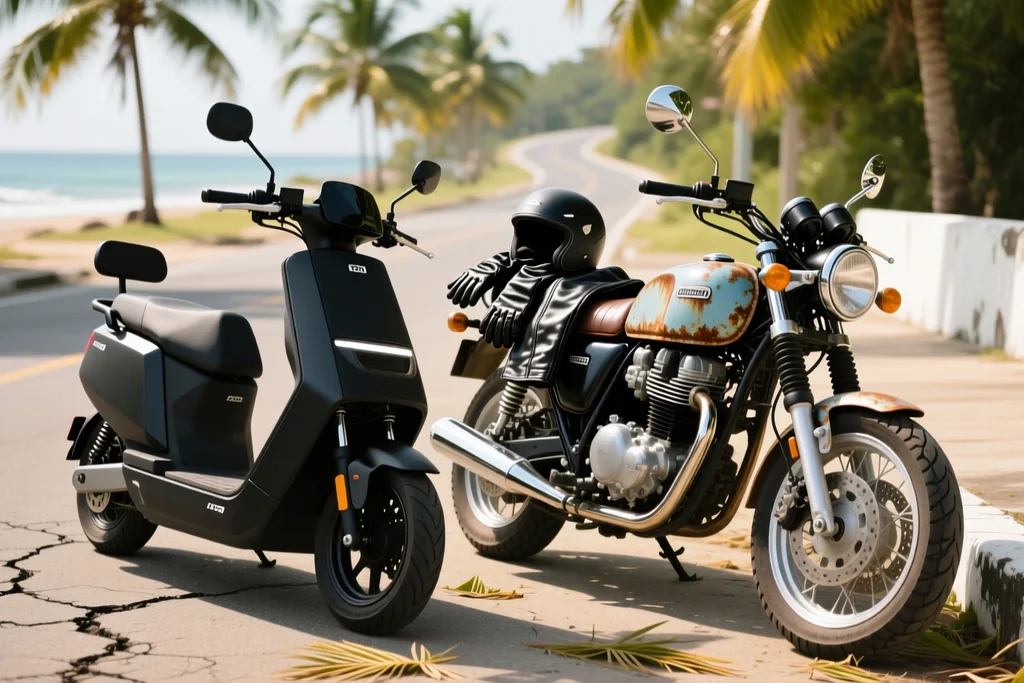
The machine you choose is the largest single factor in any quote. A larger or newer bike asks more than a simple scooter, and that difference is normal.
Match the class to your route rather than to your ambitions. There is rarely a reason to pay more for capacity you will not use.
If you are unsure, ask what the shop would recommend for your plans and compare those options side by side.
Ask yourself what the bike has to do, then let that answer decide the class, so the quote reflects your trip rather than someone else's idea of a good time. Reading the contract properly takes a few minutes and removes almost every later misunderstanding at the counter.
Season and demand
Demand moves with the seasons, and so do quotes. In the busy months the best bikes are claimed early, and availability itself becomes a factor.
Booking ahead in the high season does more for your budget than negotiating at the counter after everything good is taken.
In the quiet months there is more room to choose, and the pressure to decide on the spot is far lower.
Availability is itself part of the picture, and a machine that is already reserved in a busy week costs more than the same machine in a quiet one. The date you plan to return is worth stating clearly, since an arrangement that matches your trip is easier for both sides.
How long you are renting
Duration changes the shape of a quote as much as any other factor. A longer arrangement usually works out better per day than a short one.
If your plans are flexible, say so at the start. The shop can then suggest the arrangement that fits your trip rather than its default.
Be honest about your return date, because changing it later is more awkward than setting it clearly at the beginning.
A clear return date and a fixed plan remove guesswork for both sides, and an arrangement that suits your actual trip is usually the better value. Comparing two shops on the same class and the same duration is the fairest way to judge any offer side by side.
Condition, age and paperwork
A well-maintained, newer machine commands more than an older one, and that is a fair reflection of what you are getting.
Ask what documents the shop needs and what the arrangement will record, so there are no surprises when you sign.
A clear contract that lists the bike's condition protects you as much as it protects the shop.
The record of the bike's condition at handover is worth reading carefully, because it protects you as much as it protects the shop. A shop that explains its own terms clearly is usually a shop that is straightforward to deal with from start to finish.
What to compare between offers
Comparing two quotes means comparing more than the headline figure. What is included, and what is expected of you, matter just as much.
Look at the class of bike, the length of the arrangement, what support is offered, and how the bike's condition was recorded.
The cheapest-looking offer is not always the cheapest once you understand what it does and does not include.
Two quotes that look far apart often differ mostly in what is included, so compare the whole offer rather than the single figure at the top of it.
| Factor | Pushes it up | Keeps it lower |
|---|---|---|
| Bike class | Larger, newer machines | The class your route needs |
| Season | Busy months and high demand | Quiet months and early booking |
| Duration | Short, flexible arrangements | A clear, longer arrangement |
| Condition | Newer, better-kept bikes | Older but sound machines |
Questions that clarify a quote
A few direct questions turn a vague figure into something you can actually judge. Ask what the arrangement covers before you agree to anything.
Ask how the bike's condition is recorded, what happens if you need to extend, and who to contact if something goes wrong on the road.
Write the answers down or have them confirmed in the contract, so both sides are working from the same understanding.
Ask openly what happens if something goes wrong on the road, and who you should contact, so the answer is clear before you need it.
What decides the rental price: the factors behind the quote
Related guide on this topic.
Keeping the budget predictable
Once you understand the factors, budgeting becomes straightforward. Choose the class you need, book early in the busy season, and plan your duration in advance.
Decide what matters most to you, whether that is a newer bike, a longer arrangement or more flexibility, and let that guide the choice.
Then settle the details clearly at the start, so the rest of your trip is about riding and not about the paperwork.
With the factors understood and the questions asked, the rest of the trip stays about riding, which is exactly where your attention belongs.
- Choose the bike class that suits your route rather than the biggest one available.
- Book ahead in the busy season, when the best machines go first.
- Set your rental duration clearly at the start to avoid changing it later.
- Compare what each offer includes, not just the headline figure.
- Ask how the bike's condition is recorded and who to contact on the road.
A quote is a picture of several choices, and once you can read it you are in a much stronger position to decide.
Understand the factors, ask the right questions, and the price becomes a decision you make rather than one that is made for you.