Riders plan the rental and forget the running side, yet fuel and day-to-day use are part of every trip's budget. How much you spend on the road depends on choices you control.
This guide looks at tank size, riding style and where you fill up, so the running side of your budget is something you plan rather than something you discover.
Tank size and range
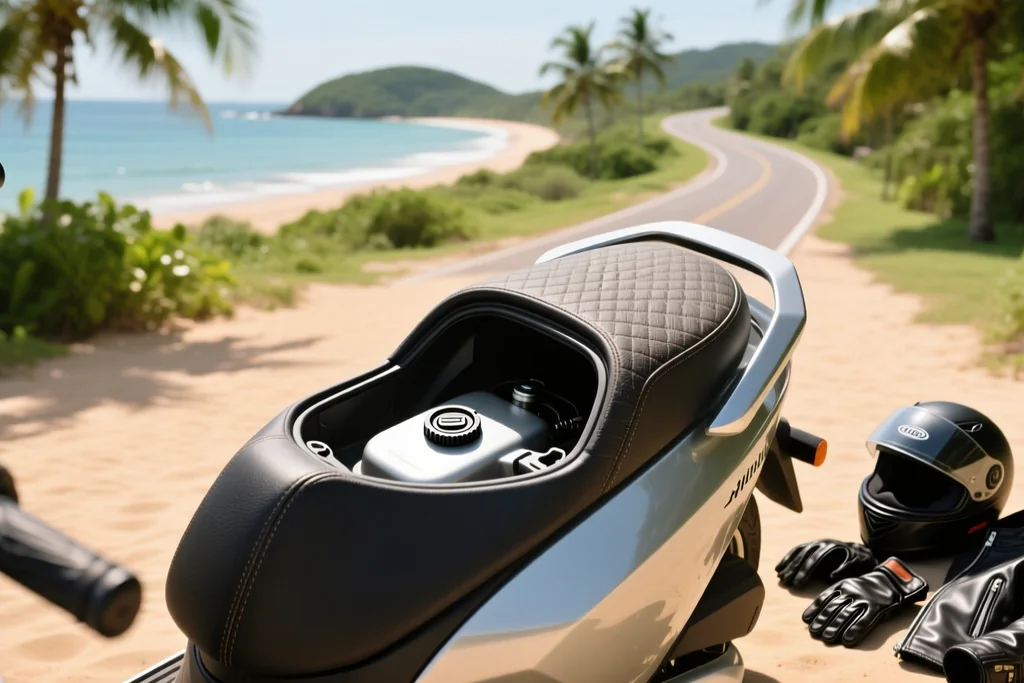
The size of the tank decides how far you can go between stops, and it varies a lot between classes. A small scooter needs more frequent fills than a larger machine.
Range also depends on how you ride, so the same tank can stretch further on a gentle day than on a fast one.
Learn your bike's range early in the trip, then plan your fills around it rather than around the hope of finding a station.
A little time spent learning the bike's range at the start of the trip saves a lot of second-guessing about when and where to fill up later. Small scooters tend to sip fuel on gentle rides, so a day of short hops rarely asks for more than a single stop.
What actually changes consumption
How much fuel a bike uses is decided by a handful of habits. Hard acceleration and high speed are the two biggest drains, and both are easy to reduce.
Weight matters too. A passenger and heavy luggage make the engine work harder, and hills add to the load.
A smooth, steady pace uses less fuel and is also the safer way to ride on island roads.
The biggest gains come from the easiest habits, so easing off the throttle and keeping a steady pace does more for consumption than any clever trick. Filling up before a long loop saves time later, when the quiet eastern roads offer few chances to stop at a pump.
Riding style and the daily budget
Two riders on the same bike can spend very different amounts simply because of how they ride. The gentle rider fills up less often.
Riding for its own sake around the island uses more than short hops to the beach, so think about the shape of each day.
Planning a route that flows, instead of one full of stop-start detours, saves fuel and makes the ride more enjoyable.
Thinking about the shape of a day, rather than the distance alone, is often the simplest way to keep the running side of the budget under control. Riding two-up on the hill sections uses noticeably more fuel than the same distance ridden alone on flat ground.
Where to fill up
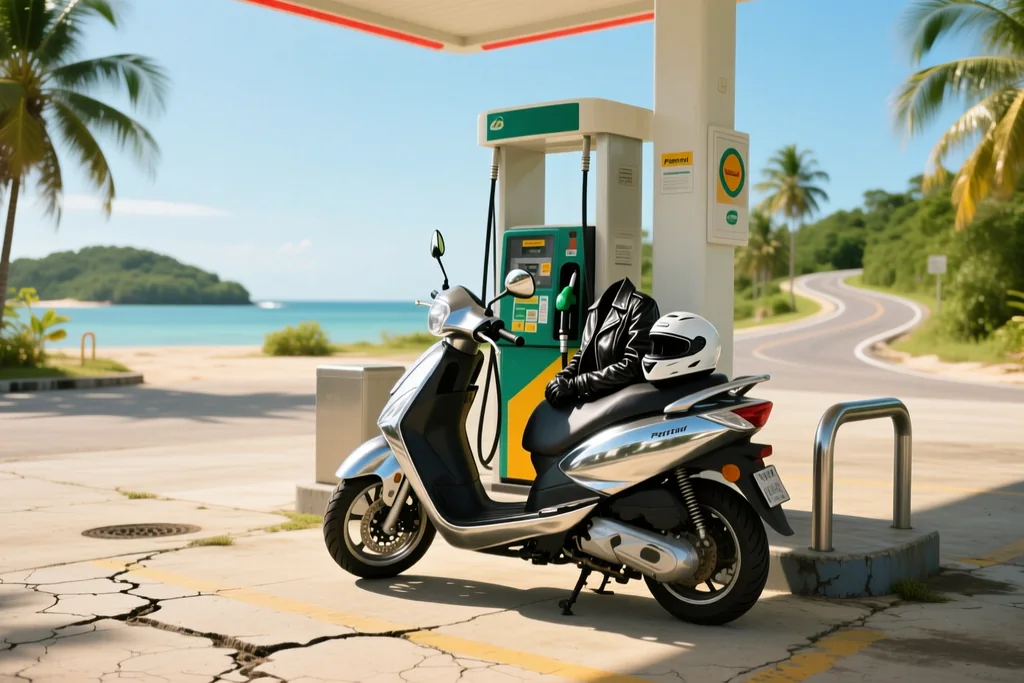
Fuel is widely available on the island, from large stations on the main roads to small roadside stands in the quieter areas. The larger stations are the simplest choice.
In remote parts, especially on the northern and eastern routes, stations are further apart, so fill up when you pass one.
Check that the bike takes the fuel you are offered and that the machine is off and cool before anyone starts filling.
Choosing a larger station on a main road usually makes filling up quick and straightforward, with less to think about at the pump. Check the tyre pressures at the start of the trip, since soft tyres make the engine work harder than it needs to.
Small habits that add up
Day-to-day running is shaped by small choices as much as by fuel. Keeping tyres at the right pressure makes the bike easier to push and gentler on fuel.
Carrying less weight and avoiding unnecessary idling both help, and neither costs you anything in comfort.
These habits are not about saving a little money so much as about riding better and spending less attention on the bike.
None of these small habits costs you anything in comfort, and together they leave you spending less time thinking about fuel at all. None of this needs close tracking; a rough sense of your range is enough to keep fuel entirely off your mind.
| Factor | Uses more | Uses less |
|---|---|---|
| Riding style | Hard acceleration and speed | A smooth, steady pace |
| Weight | A passenger and heavy luggage | Travelling light |
| Terrain | Long hill climbs | Flat coastal roads |
| Type of day | Endless detours and idling | A flowing, planned route |
Planning a day around fuel
A little planning turns fuel from an afterthought into something you never worry about. Note where the stations fall on your route before you set out.
On a long island loop, plan at least one refill partway round rather than trusting a single stop to see you home.
Keep the tank comfortably above empty, because a low tank in a remote stretch is a problem you can easily avoid.
Noting where the stations fall on a route before you set out turns fuel stops from a worry into a detail you never really think about.
Fuel and running costs: the part of the budget riders forget
Related guide on this topic.
The running side of the budget
Once fuel, riding style and route are understood, the running side of your trip is simple to plan.
Ride smoothly, fill up early, and match the bike to the riding you are actually doing, and the day-to-day costs stay predictable.
That leaves your attention where it belongs: on the road and on the ride, not on the next fuel stop.
Plan the riding with the same care you give the rental, and the day-to-day costs stay predictable from the first ride to the last.
- Learn your bike's range early and plan fills around it rather than chance.
- Ride smoothly, because hard acceleration and high speed drain the tank fastest.
- Fill up whenever you pass a station on the quieter northern and eastern routes.
- Keep tyres at the right pressure to make the bike easier to ride and push.
- On a full island loop, plan at least one refill partway round.
Fuel and running costs are easy to overlook but simple to manage once you know what shapes them.
Plan the riding, watch the small habits, and the running side of your trip stays quiet in the background where it belongs.