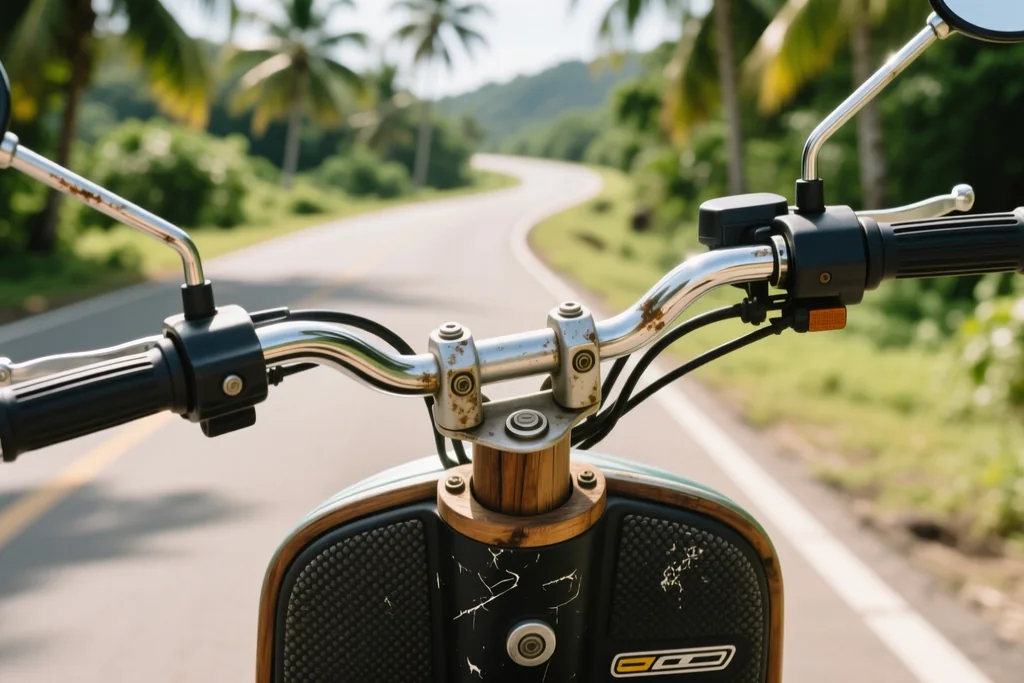
Most roadside trouble starts before the ride does. A short inspection at the shop prevents the majority of it and takes very little time. It also sets the tone for how the whole rental goes.
Two minutes is enough when you know what to look at, and it protects both your trip and your position if anything is questioned later. That short routine is worth repeating on every bike.
Start with the walk-around
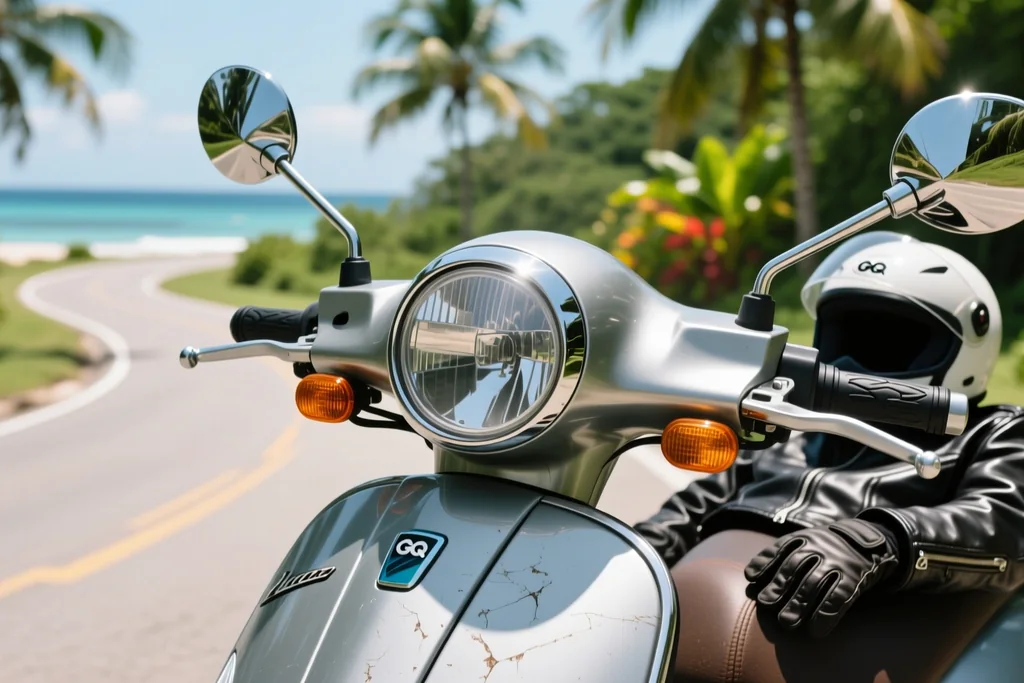
Walk around the bike once and look at it as a whole, from the front wheel to the tail, before touching anything at all. Do this before the keys change hands.
Note scratches, cracks and missing parts, and compare what you see with any condition sheet the shop provides at handover. Points you spot now are points you will not be blamed for later.
Anything already damaged should be recorded before you leave, not explained afterwards at the counter when the bike comes back. A minute of admin beats an argument at the end.
Look at the bike in daylight if you can, since small cracks and scuffs are easy to miss in the shade of a shop front. Shadows hide exactly the damage you get asked about later.
Brakes and tyres
Squeeze the front and rear brakes separately and feel for a firm response rather than a spongy or long lever travel. Each brake should feel responsive on its own.
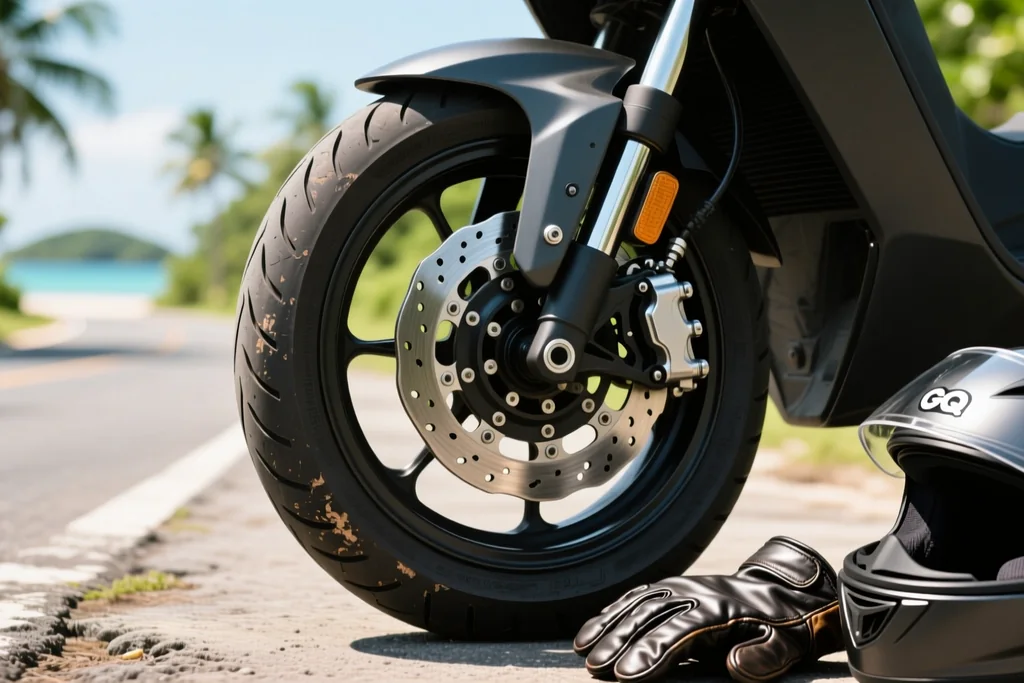
Check the tyres for tread and for bulges or cuts in the sidewall, which are common on island roads after heavy rain. Tyres are the only contact you have with the road.
Judge the pressure by feel and ask the shop to confirm it if anything seems soft under your hand or the tyre looks low. Do not ride on a tyre that looks visibly flat.
Spin each wheel slowly and listen. A grinding or scraping sound means something needs attention before you ride. It takes seconds and often reveals a dragging brake.
Lights, mirrors and controls
Test the headlight, brake light, indicators and horn, since each one is used daily in Phuket traffic and in the rain. A working brake light protects you from behind.
Adjust both mirrors before you ride rather than while moving, and check that they hold the position where you set them. Mirrors are for looking, not for adjusting on the move.
Confirm that the throttle returns cleanly to the closed position and that the levers sit where your hands expect to find them. A sticky throttle is a reason to ask for another bike.
Fluids, chain and belt
Look for leaks under the bike and around the engine, and check that the fluid levels sit where they should on any visible reservoir. Fresh fluid on the ground is a clear warning.
On a geared bike, a dry or slack chain is a warning sign. On a scooter, ask when the belt was last checked or replaced. Both are simple to sort out before you leave.
These are the items that strand riders at the roadside, and they take only seconds to look at before you ride away. A two-minute check beats a long walk home in the heat.
| Check | What you are looking for |
|---|---|
| Brakes | Firm lever, no sponginess |
| Tyres | Tread, no cuts or bulges |
| Lights | Headlight, brake light, indicators |
| Mirrors | Secure and adjustable |
| Fluids | No leaks, correct level |
Documenting the condition
Photographs are the simplest protection you can give yourself at handover. Walk around the bike and capture each panel, both wheels and the dashboard. A complete set takes less than a minute.
Include anything already scratched, cracked or scuffed, and take the pictures in daylight so the damage is clearly visible. Damage documented now is damage settled later.
Images with a date and time remove any later argument about when the damage appeared and who was holding the key. It is the simplest protection you can arrange yourself.
Keep the photos until the rental is closed out and the bike has been checked back in by the shop at the end of the trip. Delete them only once everything is settled.
The short test ride
A slow loop near the shop confirms more than a visual check ever will, especially on a machine you have not ridden before. It is the last chance to catch a problem early.
Listen for unusual noises, feel for vibration and test the brakes properly at low speed before you join moving traffic. Your ears often notice a fault before your hands do.
If something feels wrong, stop and raise it straight away rather than quietly adapting your riding around a problem. Shops would far rather swap a bike than recover one.
Ride the first few kilometres gently and let the machine tell you how it behaves before you ask much of it. A new bike always feels different from the last one.
Checking the bike before you ride away
Related guide on this topic.
Raise these before you leave
A few questions at handover save trouble on the road, and shops expect them from riders who take the rental seriously. Ask them while the shop is still standing in front of you.
Ask, note the answers somewhere you will not lose them, and only then ride away with the bike. A phone note is enough.
- The damage already on the bike and whether it is on the sheet.
- The fuel or charge level the bike should come back with.
- Where the spare key is kept.
- Which number to call if something happens.
- Anything specific to watch on this particular bike.
The inspection is not a sign of distrust; it is how a rental starts well for both sides of the deal. It protects the shop as much as it protects you.
Check it, photograph it, ride it slowly once, and then enjoy the island with one less thing to keep in your mind.