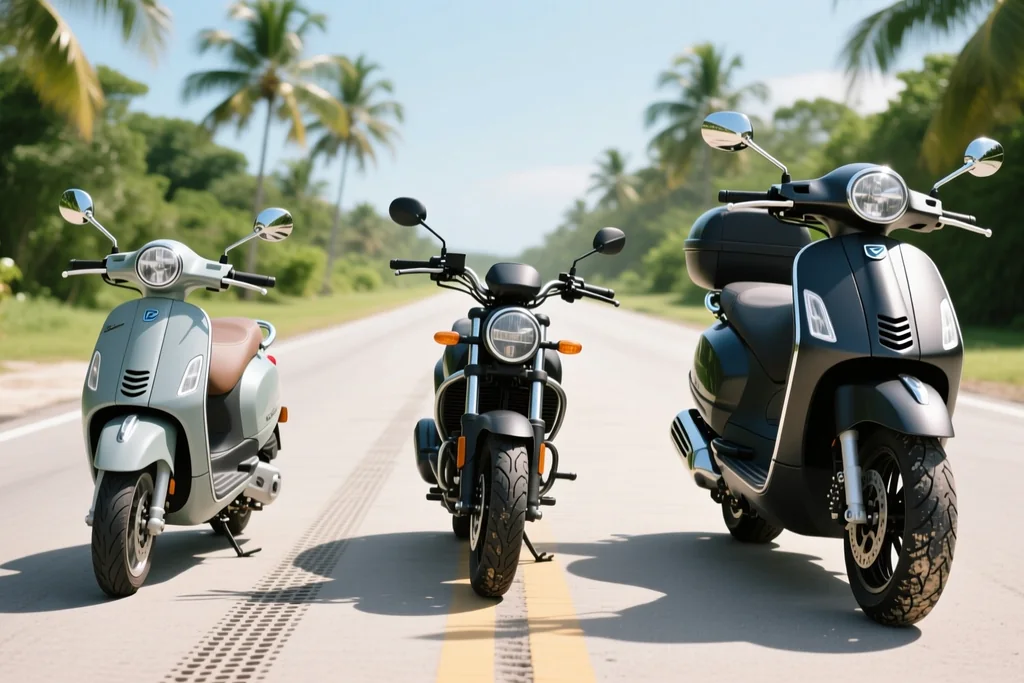
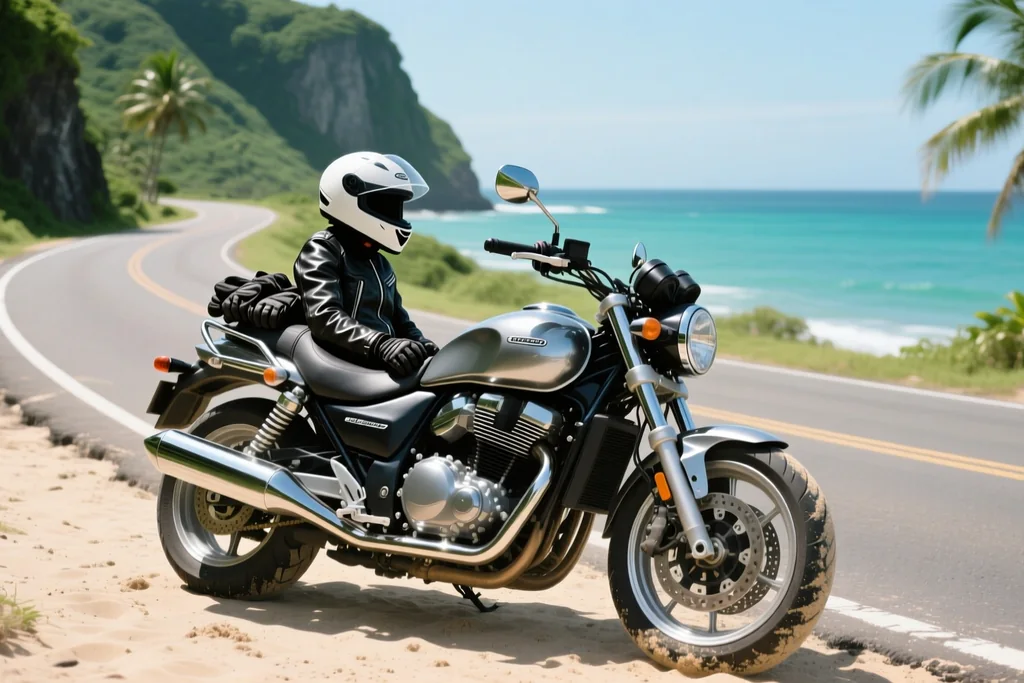
Twist-and-go or gears? It is the first question most riders face at the counter, and the answer shapes the rest of the trip more than engine size ever does. It is also the easiest question to get wrong when you are in a hurry.
Both options work well on Phuket roads, but they ask different things from you, and the difference shows up in the first hour rather than in the first week. Both are entirely normal here, and both are rented every day.
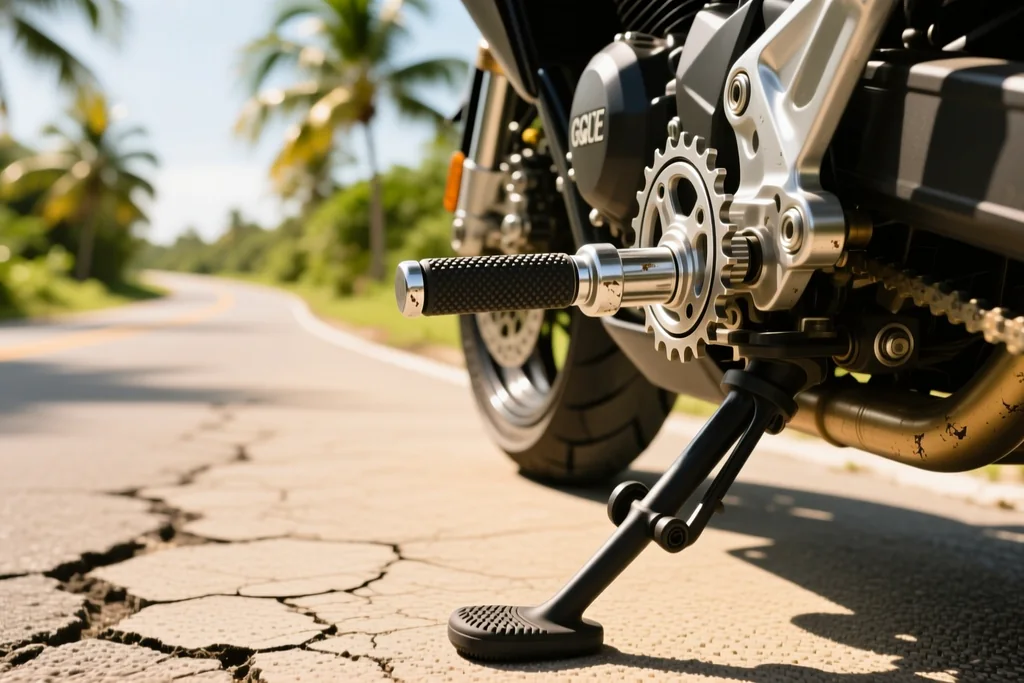
What twist-and-go really means
An automatic scooter has no clutch lever and no gear pedal. You twist the right grip to move off and squeeze the levers to stop, and the transmission handles everything in between. Nothing about it is complicated once you are moving.
That simplicity pays off in traffic. Left-hand riding already demands your attention, and removing gear changes frees a slice of it for the road itself. It also leaves one less thing to think about in the rain.
Automatics also stall far less often, which matters at busy junctions, on steep driveways and anywhere you stop and start repeatedly in the heat.
Where a manual gearbox rewards you
A manual bike gives you direct control over engine speed, and that control is useful on long descents, steady climbs and roads where you want to choose your own rhythm. That connection is why experienced riders often ask for gears.
Engine braking on a geared bike lets you slow without leaning on the brakes the whole way down a hill, which keeps them cooler and gives you a little more margin. The same trick works at walking pace in slow traffic.
Riders with motorcycle experience often prefer gears for the precision alone. If a clutch is already familiar to you, the manual is not a burden but a preference.
The learning curve in real traffic
If you have never used a clutch, the first hour on a manual will be about the clutch rather than about the road, and that is simply how it works. Expect a few jerky starts and treat them as part of learning.
Automatics let beginners concentrate on position, mirrors and the flow of traffic, which is where the real risk on two wheels actually sits. That is exactly where a new rider should spend attention.
Riders trying gears for the first time on the island should plan a quiet stretch of road before joining the coast, and give themselves a full day to get used to it.
Give yourself permission to be slow at the start. Nobody rides a new transmission perfectly in the first twenty minutes, and the island rewards patience.
Braking, engine braking and control
Both types stop well when they are ridden within their limits, but the way you slow down differs in feel and in what you do with your hands and feet. The difference is a matter of confidence as much as mechanics.
An automatic relies on the brakes plus a little engine drag from the variator, while a manual lets you add a gear of your choosing to help.
In rain, smooth inputs matter more than the type of transmission does. Nothing should happen abruptly on a wet surface, whatever you are riding. Brake earlier and squeeze the lever rather than grabbing it.
| Aspect | Automatic | Manual |
|---|---|---|
| Low-speed control | Very easy, no clutch | Needs clutch coordination |
| Traffic riding | Less to think about | More inputs to manage |
| Hill descents | Brakes do the work | Engine braking helps |
| Learning curve | Quick for beginners | Takes practice |
| Riding feel | Relaxed and simple | Engaged and precise |
Riding two-up and loaded
A passenger changes the balance of the bike, and an automatic copes with it predictably because there is no gear to choose and no clutch to slip. Tell the shop if you plan to ride two-up on most days.
On a manual, riding two-up rewards a lower gear on climbs and a gentler hand on the throttle, especially on the island steeper driveways.
Whichever you ride, brief your passenger before you set off and agree on how they should mount and dismount the machine safely.
Weight at the back also lifts the front wheel slightly on acceleration, so add luggage low and secure it so nothing shifts in a corner.
Which choice suits which trip
Short beach hops, town errands and relaxed sightseeing all suit an automatic perfectly, and most first-time visitors are happiest on one. Ease of use matters more than specification on a short trip.
Long crossings, hill routes and riders with a motorcycle background often feel more at home on a manual with a proper gearbox.
The best test is honesty about your own experience. Pick the machine that lets you think about the road instead of about the controls.
Ask to sit on both before deciding. A minute in the saddle explains more than any article about gear ratios ever could.
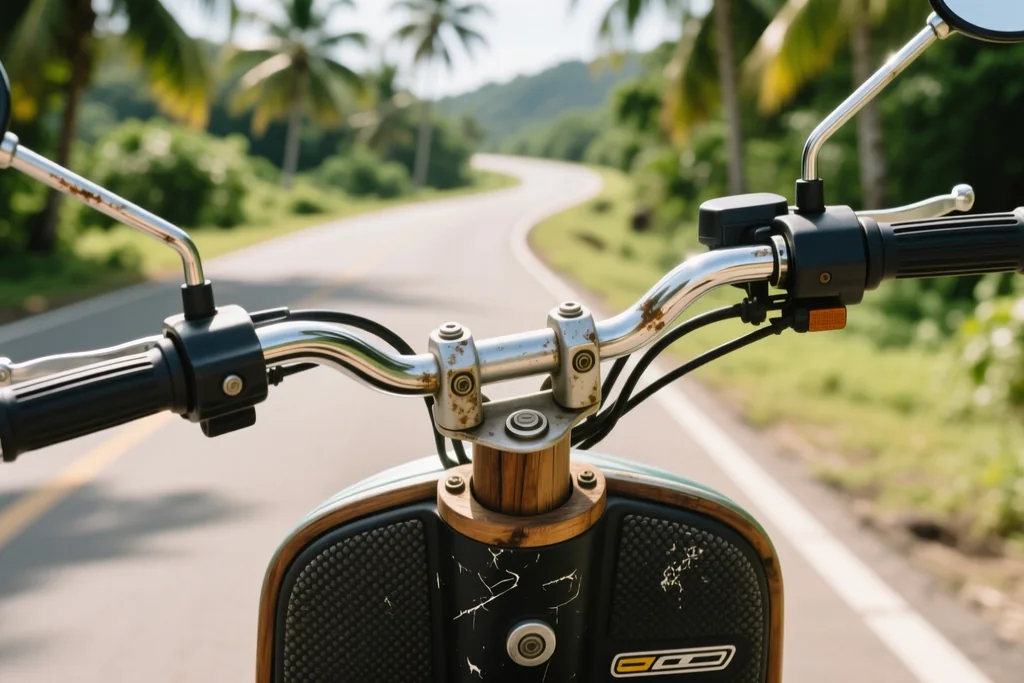
Automatic versus manual: the difference you feel on day one
Related guide on this topic.
Deciding before you book
A couple of questions at the counter will settle this faster than any comparison chart, and the answer is usually obvious once you say it out loud. You are choosing a tool for the week, not a bike for life.
Describe your experience and your plans, then ask to sit on both options before you decide which one you want for the week.
- Whether you have ridden with a clutch before, and how recently.
- Whether most of your riding will be in town or on open roads.
- Whether the route includes long descents where engine braking helps.
- Whether you will carry a passenger or luggage regularly.
- Which option leaves you calmer in moving traffic.
Neither choice is better in general, only better for you on this particular trip and on these particular roads.
An automatic lowers the effort and lets you watch the road. A manual adds control for riders who already know what to do with it.