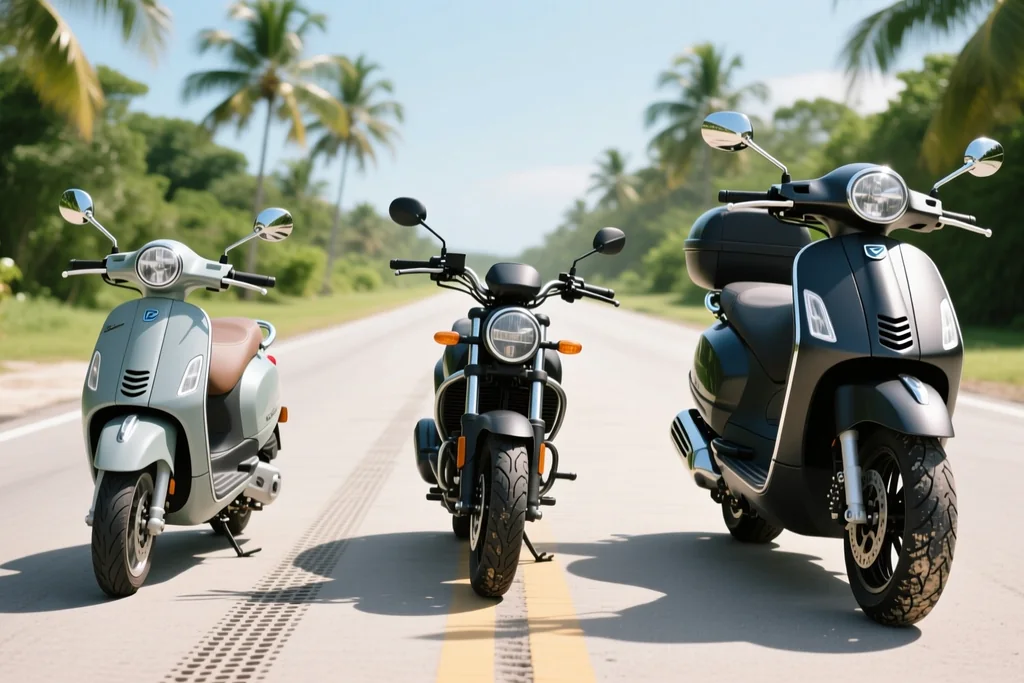
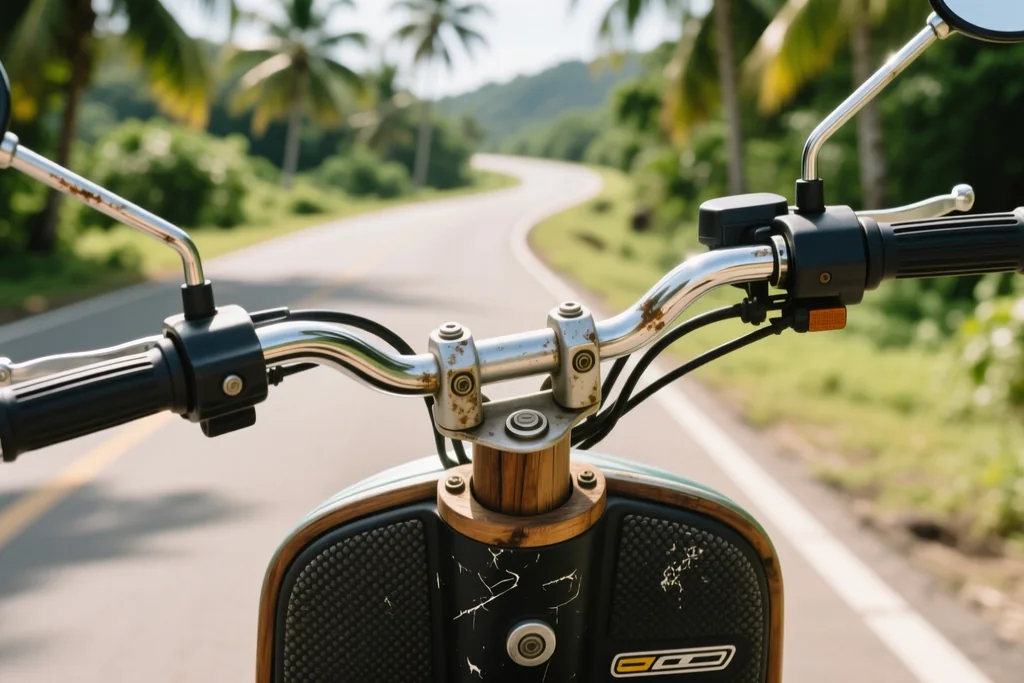
Stepping up to a bigger machine is a decision about the ride you want, not a measure of skill. Weight, power and luggage capacity all change together and in the same direction. It is worth asking what the extra capacity is actually for.
On Phuket a larger bike can make long days easier and more comfortable, and it can also turn a short trip into more effort than it needs to be. The island itself decides which of those outcomes you get.
What a bigger bike actually adds
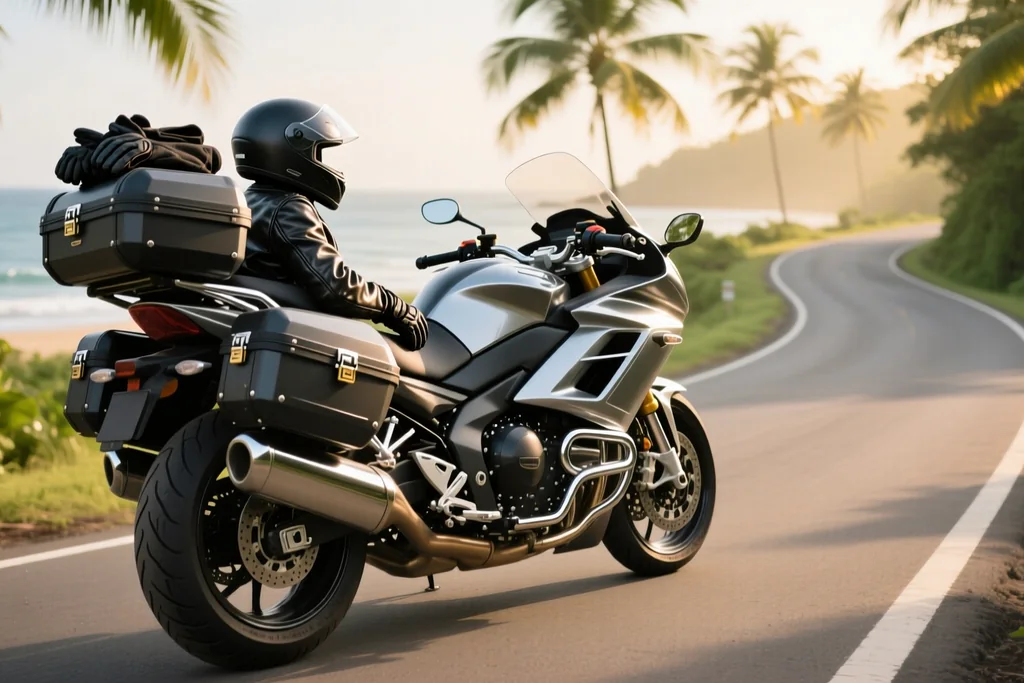
A larger machine carries speed with less effort and holds a line more calmly over long distances and in crosswinds on exposed stretches. That calm matters on the long highway stretches.
It also brings luggage options, better wind protection and a seating position built for hours rather than for minutes at a time. Those are the things you notice most in hour three.
For riders planning to cross the island several times during their stay, those advantages accumulate quickly over a week and make long days feel short. The benefit is measured in fatigue rather than in speed.
None of that matters if the trip is short. The bigger bike only earns its place when the distance is real.
Weight, and what it asks in return
Every advantage of a bigger bike comes with weight, and weight shows up first in parking, in slow manoeuvring and in tight turns. That is the trade you make when you step up a class.
Moving a heavy machine by hand on a slope demands technique as much as strength, especially on the steep driveways common along the island hills. Ask for help rather than risking a slow drop.
A rider should be able to walk the bike backwards out of a space and hold it upright at a standstill before taking it onto the road. If that feels doubtful, the machine is too big for now.
Practise the slow stuff somewhere empty before you trust yourself in traffic, and give the machine your full attention.
Power delivery on island roads
Extra power is useful in specific moments: overtaking on a clear straight, climbing with a passenger aboard, holding a steady pace on the highway. Outside those moments it is simply potential you are carrying.
It is far less useful in dense traffic, where restraint and smoothness matter much more than whatever the engine can produce at full throttle. Smoothness beats horsepower in a queue.
The skill with a bigger bike is using a fraction of what it offers and keeping the rest in reserve for the moment you need it.
Rolling gently onto the throttle usually gets you moving faster than grabbing it, and it keeps the bike settled underneath you.
Luggage and the shape of a long day
Touring is mostly a storage question. Panniers, a top box or a tank bag decide what you can carry without wearing a backpack all day. Storage decides how lightly you can travel on a long day.
Weight placed high on the bike changes handling, so load the heavier items low and keep the total balanced on both sides. Check the load is secure before you ride off.
Plan the day around comfortable distances rather than ambitious ones, especially on a first outing with a machine you do not know.
| Aspect | Small scooter | Larger touring bike |
|---|---|---|
| Distance comfort | Short hops | Long days |
| Luggage | Limited storage | Panniers and boxes |
| Wind at speed | Exposed | Better protection |
| Parking | Simple | Needs planning |
| Riding effort | Light | Rewards experience |
Comfort, wind and posture
Wind protection and posture decide how fresh you feel after a long ride, often more than power or top speed ever will. Fatigue arrives quietly and then all at once.
An upright position with relaxed arms reduces fatigue, and a screen keeps the chest out of the airflow for hours at a time. Loosen your grip and let your arms stay slightly bent.
Adjust whatever you can before you leave, because a small discomfort becomes a large one after two hours in the saddle.
Take a short break every hour or so. Ten minutes off the bike buys back far more than the same time spent riding tired.
Riding a heavier machine in traffic
A heavier bike behaves differently in stop-start traffic, where low-speed balance matters most and a moment of inattention matters more. Balance at walking pace is the real test of a big bike.
Braking distances grow with weight and speed, so leave more room ahead than you would on a scooter and start slowing earlier. Weight is the part riders underestimate most.
Riders new to a big bike should spend the first twenty minutes somewhere calm, repeating the basics until they feel natural.
Keep the bike upright at junctions and avoid sudden steering inputs when the road surface is wet or covered in sand.
Bigger bikes and touring: when it is worth stepping up
Related guide on this topic.
Is it your trip?
The honest answer usually appears when you describe your plans out loud to someone who has ridden on the island before and knows the roads.
If your days are short rides between beaches, a bigger bike adds work without adding much that you will actually notice.
- The distances you plan to cover on most days.
- Whether you need to carry luggage without a backpack.
- How comfortable you feel with the weight at a standstill.
- Whether you have ridden a machine of this size recently.
- Whether the route includes fast roads where stability counts.
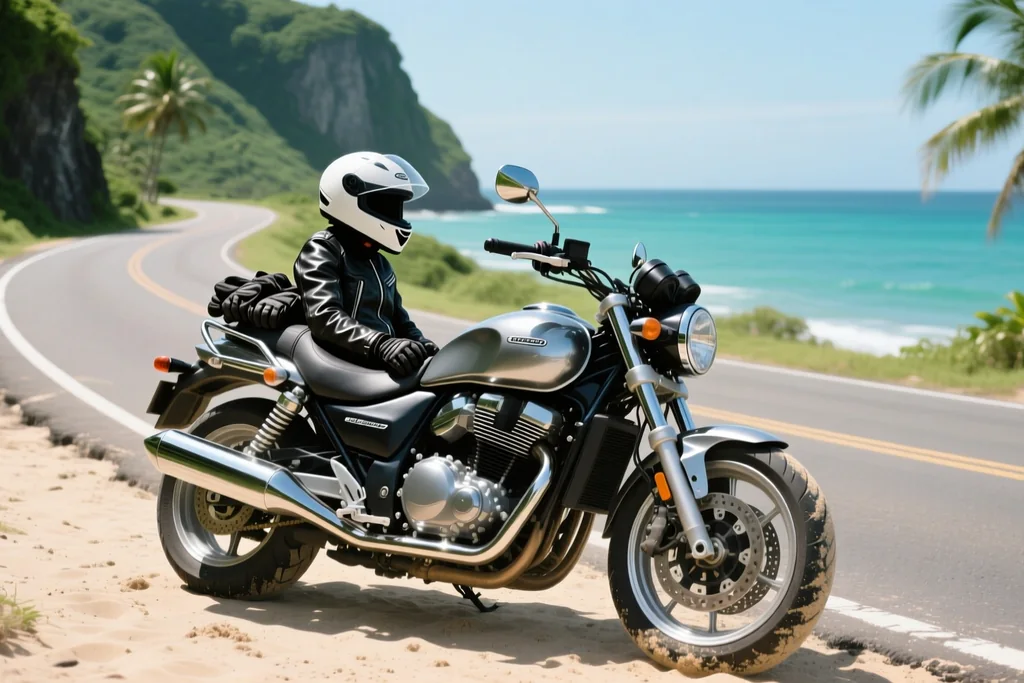
Step up when the trip genuinely asks for it, not because a bigger bike seems more serious or more appropriate to someone else.
The right machine is the one that still feels easy at the end of a long day on the island, not the one with the largest engine.