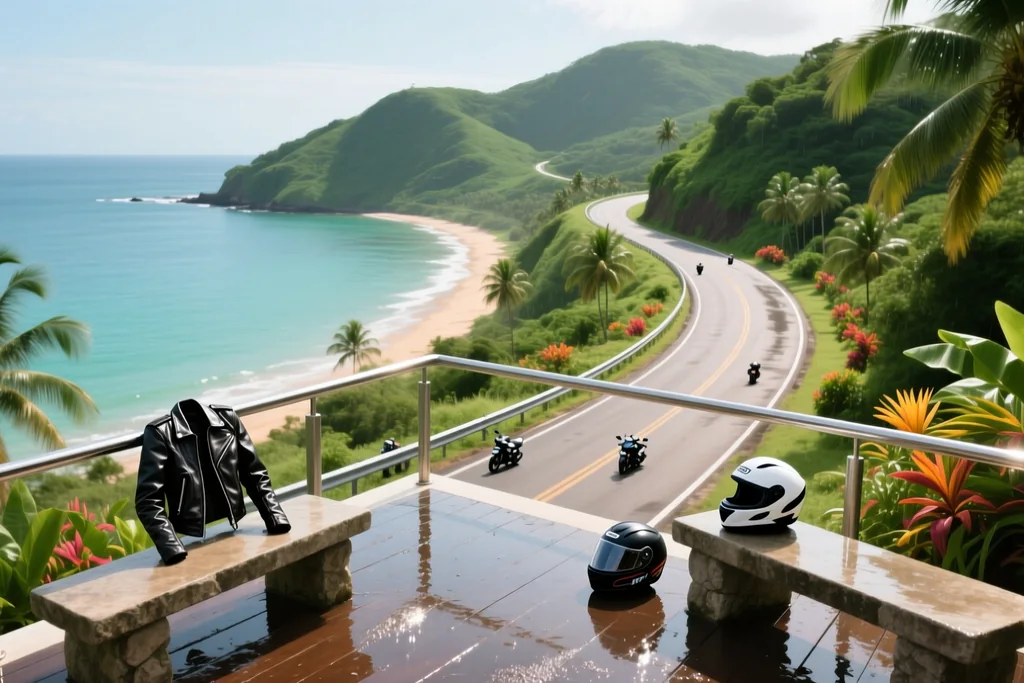
The rainy season does not close the island to riders, but it does change the road. Grip, visibility and timing all shift, and the routes that feel easy in the dry can demand real care once the water arrives.
This guide looks at how the riding changes when Phuket turns wet: what to adjust, when to wait, and how to plan a day so a shower does not ruin it.
How the road changes when it rains
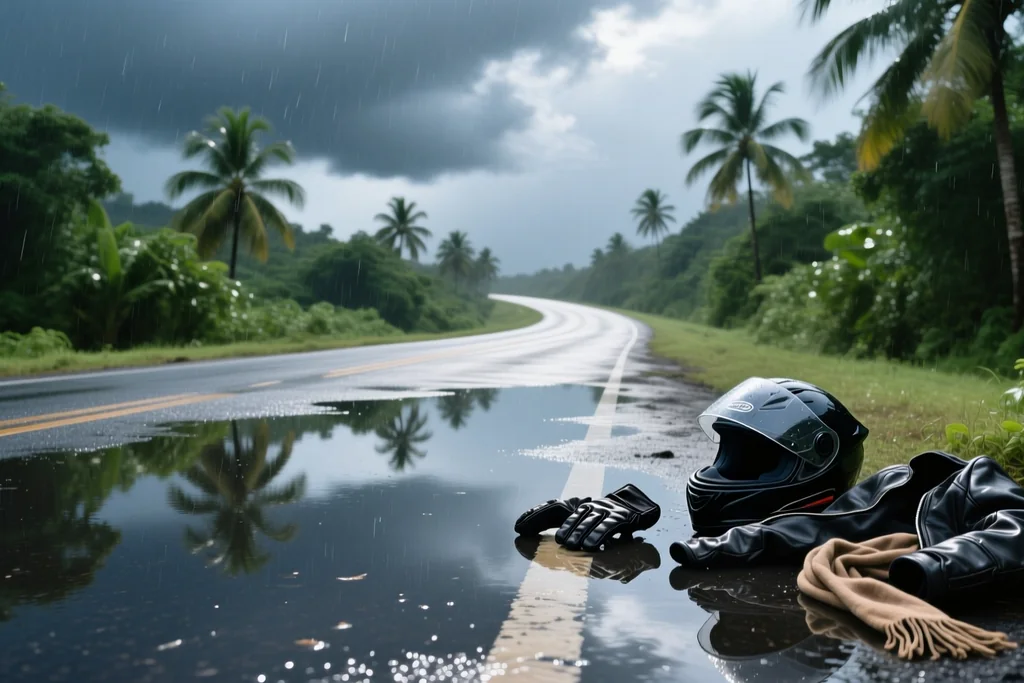
Rain changes the surface far more than it changes the sky. The first minutes are the most slippery, as oil and dust lift off the tarmac before the water washes them away.
Manhole covers, painted lines and metal plates turn slick, and shaded corners dry out far more slowly than the open road.
None of this means stop riding; it means read the surface and leave yourself more room than usual.
The surface can change from one corner to the next, so read each bend on its own rather than trusting the road you rode a moment ago. Grip in the wet is best judged on the move, so feel for the road through the bars rather than assuming the very worst.
Grip and the way you brake
The basic habits that keep you safe in the dry simply matter more in the wet. Brake earlier and more gently, and put the emphasis on the rear brake at low speed.
Keep the bike more upright through bends and avoid sudden inputs on the bars or the throttle.
Smoothness is the whole technique. Every corner that feels rushed in the rain is a corner that asked for patience.
Everything that keeps you safe in the dry simply matters more in the wet, and the rider who is smoothest is usually the rider who gets home relaxed. Bridges, junction paint and drain covers all turn slick quickly, and each is worth crossing with a steady, unpanicked hand.
Visibility for you and around you
Your own sight lines shrink in heavy rain, and so does everyone else's. A clean visor and working lights are not optional in these conditions.
Ride where you can be seen rather than where you can see, because the risk is usually the driver who has not noticed you.
Heavy spray from traffic can leave you riding blind for a moment, so keep more distance than you think you need.
Heavy rain shortens what everyone can see, so ride as though you are partly invisible and give other road users every chance to notice you. A wet-season ride rewards an early start even more than a dry one, because the mornings are usually the calmest window of the day.
Choosing the wet-weather route
Route choice matters more in the wet than at any other time. The quiet east side, with its straighter roads and lighter traffic, is often the better choice when the weather turns.
The hilly west coast demands more from grip and brakes, so save it for a dry spell.
Avoid the narrow shaded lanes after a downpour, where running water carries grit across the surface.
Roads that sit in permanent shade dry far more slowly than open stretches, which is worth remembering when you plan which way to go. Keeping the bike smooth through a wet bend is simply the dry-weather technique slowed down and stretched out a little further.
When to wait and when to go
Tropical rain often arrives hard and leaves quickly. Waiting out the worst of a shower under cover is usually the fastest way to keep riding.
If the rain settles in, adjust your plan rather than fighting it. A shorter ride on a safer road beats a long one on a bad surface.
Watch the sky as well as the road. A dark wall of cloud on the horizon is your cue to have a plan.
Tropical downpours often pass quickly, so waiting a few minutes under a roof is frequently faster than pushing on through the worst of it. If the rain settles in for the afternoon, a shorter ride on a safer road beats a long one on a poor surface every time.
| Factor | In the dry | In the rain |
|---|---|---|
| Grip | Predictable surface | Oil, paint and grit are slick |
| Braking | Later and firmer | Earlier and much gentler |
| Visibility | Clear sight lines | Spray and mist shorten the view |
| Route choice | Any road works | Straighter roads are safer |
Looking after the bike and yourself
Wet riding is cold riding once you are moving, and being cold dulls your attention. A light rain layer changes a difficult day into a comfortable one.
Check that your tyres and brakes are in good order before you set out, since the wet only makes weak equipment weaker.
Dry your visor at stops, and wipe your mirrors, because a smeared view is as dangerous as a missing one.
A light waterproof layer and a pair of dry gloves keep you comfortable and alert, and comfort in the rain is really another word for safety.
Riding in the rainy season: how the routes change
Related guide on this topic.
Planning a wet-season day
Plan around the weather rather than against it. Mornings are often the drier, calmer window, so put the riding you care about first.
Keep the day flexible. A route you can shorten at several points is worth far more than one with a single long return.
Start with the riding you most want to do, so a change in the weather costs you the least.
Build the day around the weather rather than against it, and the rainy season becomes a quiet, uncrowded way to see the island.
- Take extra care in the first minutes of rain, when the surface is most slippery.
- Brake earlier and more gently, keeping the bike upright through the bends.
- Keep your visor clean and your lights on, and ride where you can be seen.
- Favour the straighter east-side roads when the weather turns wet.
- Wait out the heaviest showers under cover rather than pressing on.
Riding in the rainy season is a skill, not a gamble. Read the surface, adjust your pace and choose roads that suit the conditions.
Do that, and the wet months become just another way to see the island, with quiet roads and skies all to yourself.